Few compounds in modern nutritional science have a history as quietly remarkable as palmitoylethanolamide: better known as PEA. Discovered not in a pharmaceutical laboratory but in everyday foods like egg yolk and peanut meal, PEA spent decades on the margins of research before re-emerging as one of the more rigorously studied natural compounds for pain and neuroinflammation. Its story is a useful reminder that the body’s own chemistry often deserves a second look.
This article traces the palmitoylethanolamide history and discovery from its first isolation in the mid-twentieth century through the Nobel-prize-connected science of the 1990s and on to the micronized formulations and randomized trials of today. The goal is an honest account: where the evidence is strong, where it is still preliminary, and what a person considering PEA as a supplement should reasonably know.
Key Takeaways
- PEA was first isolated from egg yolk and other foods in 1957 and initially described as an ‘anti-inflammatory factor’ before being chemically identified as palmitoylethanolamide.
- Nobel laureate Rita Levi-Montalcini revived scientific interest in PEA in the 1990s with her mast-cell and ALIA research, providing the first clear mechanistic hypothesis.
- PEA’s primary proposed mechanism is PPAR-α nuclear receptor activation, which regulates inflammatory gene expression; it also interacts with TRPV1 channels and the endocannabinoid system.
- Micronized and ultra-micronized formulations were developed to improve dissolution, but no head-to-head trial shows they are absorbed better, and they are the versions used in many recent clinical trials [3][4].
- Clinical evidence in pain conditions is accumulating but reviewers consistently call for larger, longer trials; PEA is a supplement, not an FDA-approved treatment.
The 1950s: An Anti-Inflammatory Factor in Egg Yolk
The earliest systematic work on PEA emerged from post-World War II nutritional research. In 1957, scientists at Merck Sharp & Dohme Research Laboratories, building on observations that certain food fractions could suppress inflammatory responses, isolated a lipid fraction from egg yolk, peanut meal, and soybean lecithin that demonstrated measurable anti-inflammatory activity in animal models[1][2]. At the time the compound had no agreed name; researchers referred to it broadly as the ‘anti-inflammatory factor’ of egg yolk.
PEA was isolated in 1957, and its modern story runs through Czech trials and a Nobel laureate
First isolated
Kuehl and colleagues isolated a crystalline anti-inflammatory factor from soybean lecithin. PEA was also identified in egg yolk and peanut oil.
Found in mammalian tissue
PEA was identified in mammalian tissues.
Czech approval
Manufacturing was approved by the Czech Ministry of Health, according to a summary of older Czechoslovak studies.
Impulsin trials
A review counts 3627 patients and volunteers completing 6 placebo-controlled double-blind trials for flu and colds, 1937 of them on PEA.
ALIA
Nobel laureate Rita Levi-Montalcini reported that PEA downregulates hyperactive mast cells in a dose-dependent way.
PEA has a long research history, but most of the early human work predates modern trial standards.
Dates are as reported in the cited reviews. Source: Hesselink et al., International Journal of Inflammation 2013; Rankin et al., International journal of molecular sciences 2020; Nestmann, Food Science & Nutrition 2016; Roncati et al., Prostaglandins & other lipid mediators 2021.
Embed this chart
Free to reuse on your site. Copy the code below; please keep the credit link.
Chemical characterization confirmed the substance as N-(2-hydroxyethyl)hexadecanamide, a fatty acid amide formed from palmitic acid and ethanolamine. It was eventually named palmitoylethanolamide and recognized as a member of the N-acylethanolamine (NAE) family: a class of bioactive lipids that includes the endocannabinoid anandamide. Crucially, PEA is produced endogenously in human and animal tissues, meaning the body synthesizes it on demand rather than relying on dietary intake alone.
Early animal studies suggested that oral supplementation of PEA could reduce fever and blunt inflammation, but the mechanisms were unknown and the field lacked the molecular tools to pursue them. The compound attracted modest academic interest through the 1960s and then largely faded from mainstream attention for nearly three decades.
The gap was not complete. In the 1970s, two older trials used to support PEA’s approval as a drug under the name Impulsin enrolled 1300 subjects, about half given 30 mg/kg PEA and half placebo for 12 consecutive days, and a summary of older Czechoslovak studies reports that manufacturing of PEA was approved by the Czech Ministry of Health in 1970. These accounts come from industry-linked sources [12].
The Levi-Montalcini Era: A Nobel Laureate Revives Interest
The modern chapter of PEA research owes a significant debt to Rita Levi-Montalcini, the Italian neurobiologist who won the 1986 Nobel Prize in Physiology or Medicine for the discovery of nerve growth factor (NGF). In the early 1990s, Levi-Montalcini and her colleagues turned their attention to mast cells, immune cells concentrated in tissue near nerve fibers, and their role in neurogenic inflammation. They found that PEA was consistently present in tissues subject to inflammatory challenge and proposed that it might act as a local, on-demand brake on mast-cell activation.
Research note: A review of the 1972 to 1977 Impulsin trials counts 3627 patients and volunteers completing 6 placebo-controlled double-blind trials, with 1937 receiving PEA at up to 1800 mg/day. Old trials, reviewed by authors with commercial PEA ties; not modern-standard evidence [13].
This ‘autacoid local inflammation antagonism’ (ALIA) hypothesis reframed PEA not as an exogenous drug but as an endogenous modulator: a molecule the body already makes to self-limit inflammatory signaling when it overshoots. Levi-Montalcini reportedly took PEA herself in her later decades, she lived to 103, and continued publishing on the compound well into her nineties. While individual anecdote carries no scientific weight, her sustained advocacy kept the compound visible at a time when pharmaceutical funding flowed elsewhere.
The ALIA framework gave researchers a mechanistic foothold and spurred a new wave of investigations into how PEA interacts with immune and nerve cells at the tissue level.
Identifying the Mechanism: PPAR-α and Beyond
Through the late 1990s and into the 2000s, researchers worked to pin down exactly how PEA produces its effects. A major advance came when the peroxisome proliferator-activated receptor alpha (PPAR-α) was identified as a primary molecular target. PPAR-α is a nuclear receptor that, once activated, regulates gene expression related to lipid metabolism, oxidative stress, and inflammatory cytokine production. PEA binding to PPAR-α suppresses the transcription of several pro-inflammatory genes, providing a plausible explanation for the anti-inflammatory activity observed since the 1950s.
Additional research pointed to secondary mechanisms: interaction with transient receptor potential vanilloid type 1 (TRPV1) channels involved in pain signaling, activity at GPR55 and GPR119 receptors, and what researchers call an ‘entourage’ relationship with the endocannabinoid system, PEA is proposed to slow the breakdown of anandamide, which would amplify endocannabinoid tone without directly binding cannabinoid receptors; this entourage effect rests on cell studies and reviews, not human data [9][10]. This multi-target profile distinguished PEA from single-mechanism anti-inflammatories and made it an attractive research subject for complex pain conditions.
Importantly, PEA operates outside the opioid receptor system entirely, which has lent its safety profile additional appeal at a time of heightened concern about opioid dependence.
The Bioavailability Problem and Micronized Formulations
A persistent challenge through the 2000s was bioavailability. PEA is a lipophilic solid with poor solubility in aqueous environments, which is why makers turned to particle size reduction. A review reports particle sizes of 2 to 6 micrometres for micronized PEA and 0.8 to 2 micrometres for ultramicronized PEA, but a pharmacology review says unmicronised, micronised and ultra-micronised PEA are all absorbed after oral dosing, with little data on actual absorption [5][4].
A pharmacology review found no head-to-head trial comparing micronized with unmicronized PEA and no published information on oral bioavailability, so it is not shown that ultra-micronized preparations reach higher plasma concentrations than standard PEA. Many recent clinical trials have used these advanced formulations [3][4]. When evaluating the research literature on PEA, noting which formulation was tested matters: findings from a standard-particle trial may not translate directly to an ultra-micronized product, and vice versa.

Clinical Research: Where PEA Has Been Tested
From the 2010s onward, randomized controlled trials and systematic reviews began accumulating across several pain categories. Areas receiving the most research attention include neuropathic pain (including diabetic neuropathy and postherpetic neuralgia), low back pain, fibromyalgia, endometriosis-associated pelvic pain, and temporomandibular disorder. Some trials have also examined PEA in the context of neuroinflammatory conditions and post-COVID symptom management.
A recurring theme in this literature is effect size: Meta-analyses favour PEA for pain, but they pool few, varied trials of often poor quality, and several controlled trials were null, including a 61-patient placebo-controlled trial in carpal tunnel syndrome and an 88-patient pilot in established chemotherapy-induced neuropathy. Few serious adverse events are reported [6][7][8]. However, the field is not without limitations. Many trials are small, follow-up periods are short (commonly four to twelve weeks), and study populations vary in ways that make direct comparison difficult. Several systematic reviews have called for larger, longer-duration trials with standardized outcome measures before definitive clinical recommendations can be made.
Regulatory status reflects this evidence stage: PEA is classified as a dietary supplement in the United States and as a food supplement in most of Europe. It is not FDA-approved to diagnose, treat, cure, or prevent any disease. Products branded under trade names such as Normast, PeaPure, and Levagen+ represent commercial formulations available to consumers, though they are sold for general wellness rather than as treatments for any specific condition.
PEA Today: A Compound Still Earning Its Place
The trajectory from egg-yolk isolate to modern supplement encapsulates how slowly but persistently bioactive lipid research can develop. PEA spent roughly thirty years in relative obscurity, was revived by a Nobel laureate’s mechanistic insight, then benefited from advances in formulation science and a growing clinical trial base. As of the mid-2020s it occupies a position somewhere between ‘promising and plausible’ and ‘fully validated’: better evidenced than most supplements, but not yet at the standard required for pharmaceutical approval in pain indications.
For consumers and clinicians, that positioning calls for measured expectations. The historical arc of PEA is genuinely compelling: endogenous origin, multi-target mechanism, favorable tolerability data, and decades of incremental science. What it does not yet provide is the scale and rigor of evidence that would justify replacing established therapies. PEA’s history is still being written.
🛒 Where to Buy Palmitoylethanolamide (PEA)
- Wellness Resources PEA Ultra with Levagen+
capsules, 300 mg PEA (as Levagen+) per serving: Levagen+ with LipiSperse, a branded PEA ingredient marketed for solubility and absorption - Nootropics Depot Palmitoylethanolamide (PEA) Capsules
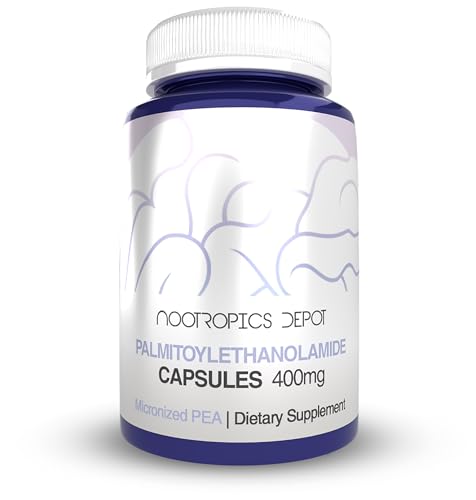
capsules, 400 mg micronized PEA per capsule: two or three capsules reach the 600 to 1,200 mg daily range used in trials - Liftmode Palmitoylethanolamide (PEA) Powder
powder, 400 mg per measured scoop: Powder form allows flexible dosing and is significantly cheaper per gram for long-term daily users
As an Amazon Associate we earn from qualifying purchases. PEA quality depends on particle size more than price. Most clinical research used micronized or ultramicronized material, so prefer a product that states its particle size grade or names a branded ingredient such as Levagen+, and check the daily serving reaches the 600 to 1,200 mg used in trials. A label reading only palmitoylethanolamide, with no particle size disclosure, may be standard crystalline powder, but no published human data show how much any PEA form is absorbed.
A Note on the Evidence
The clinical evidence for PEA, while accumulating, largely consists of small, short-duration trials, and PEA is not FDA-approved to treat any disease; it is a dietary supplement and this article is informational, not medical advice. Individuals who are pregnant, nursing, immunocompromised, or taking prescription medications (particularly immunosuppressants, anticoagulants, or chemotherapy) should speak with a qualified healthcare provider before use.
Frequently Asked Questions
Who first discovered PEA?
PEA was first isolated in 1957 by researchers at Merck Sharp & Dohme Research Laboratories, who were studying anti-inflammatory fractions in egg yolk, peanut meal, and soybean lecithin. The compound was chemically characterized as palmitoylethanolamide over subsequent years. It was not created in a laboratory but identified as something that occurs naturally in food and in human tissue.
What does PPAR-α activation actually do?
PPAR-α is a nuclear receptor: a protein that, when activated, moves into a cell’s nucleus and influences which genes are turned on or off. When PEA binds PPAR-α it suppresses the expression of several pro-inflammatory signaling molecules including cytokines and enzymes involved in the inflammatory cascade. This gene-regulatory action is thought to underlie much of PEA’s observed anti-inflammatory effect in tissue.
Is PEA the same as a cannabinoid?
No. PEA belongs to the same broad N-acylethanolamine chemical family as the endocannabinoid anandamide, and it may indirectly support endocannabinoid signaling by slowing anandamide breakdown. However, PEA does not bind CB1 or CB2 cannabinoid receptors directly and is not classified as a cannabinoid. It has no psychoactive properties and is licensed as a nutraceutical, food supplement or food for medical purposes in different countries [9][11][10].
Why does formulation (micronized vs. standard) matter?
PEA is a fat-soluble solid that dissolves poorly in the watery environment of the gut. Micronized and ultra-micronized forms are ground to very small particle sizes, which is meant to improve dissolution, but a pharmacology review found no head-to-head trial comparing micronized with unmicronized PEA and no published information on oral bioavailability. Many recent clinical trials use these advanced formulations, so consumers should check product labels to understand what they are buying [3][5][4].
What conditions have clinical trials studied PEA for?
Research has examined PEA primarily in chronic and neuropathic pain conditions including diabetic neuropathy, low back pain, fibromyalgia, endometriosis-associated pelvic pain, postherpetic neuralgia, and temporomandibular disorder. Some trials have also looked at neuroinflammatory and post-viral contexts. Results on tolerability have generally been favorable. Pain results are mixed: meta-analyses favour PEA, but several controlled trials were null, and reviewers consistently note that trials are often small and short [6][7][8].
Is PEA safe to take with medications?
PEA has shown a favorable tolerability profile in clinical trials with few serious adverse events reported. However, because it modulates immune and inflammatory signaling, individuals taking immunosuppressants, anticoagulants, or chemotherapy agents should consult a physician before adding PEA. This is general caution, not evidence of a confirmed interaction. PEA is a supplement and is not subject to the same pre-market safety review as pharmaceuticals.
References
- Kuehl FA Jr, Jacob TA, Ganley OH, Ormond RE, Meisinger MAP. The Identification of N-(2-Hydroxyethyl)-Palmitamide as a Naturally Occurring Anti-Inflammatory Agent. Journal of the American Chemical Society 79(20):5577-5578 (1957). doi:10.1021/ja01577a066
- Keppel Hesselink JM. Evolution in pharmacologic thinking around the natural analgesic palmitoylethanolamide: from nonspecific resistance to PPAR-α agonist and effective nutraceutical. Journal of pain research (2013). PMID 23964161
- Linda Rankin et al. Palmitoylethanolamide for the treatment of pain: pharmacokinetics, safety and efficacy. British Journal of Clinical Pharmacology (2016). PMID 27220803
- Rankin L et al. The Basal Pharmacology of Palmitoylethanolamide. International journal of molecular sciences (2020). PMID 33114698
- Roncati L et al. Micronized / ultramicronized palmitoylethanolamide (PEA) as natural neuroprotector against COVID-19 inflammation. Prostaglandins & other lipid mediators (2021). PMID 33636368
- Artukoglu BB et al. Efficacy of Palmitoylethanolamide for Pain: A Meta-Analysis. Pain physician (2017). PMID 28727699
- Faig-Martí J et al. Use of palmitoylethanolamide in carpal tunnel syndrome: a prospective randomized study. Journal of orthopaedics and traumatology : official journal of the Italian Society of Orthopaedics and Traumatology (2017). PMID 28299455
- Mellar P. Davis et al. Treatment of Established Chemotherapy-Induced Neuropathy with N-Palmitoylethanolamide: A Randomized, Double-Blind Phase II Pilot Study. Cancers (2024). PMID 39766143
- Vincenzo Di Marzo et al. Palmitoylethanolamide inhibits the expression of fatty acid amide hydrolase and enhances the anti-proliferative effect of anandamide in human breast cancer cells. Biochemical Journal (2001). PMID 11485574
- Clayton P et al. Palmitoylethanolamide: A Natural Compound for Health Management. International journal of molecular sciences (2021). PMID 34069940
- Sugiura T et al. Evidence that 2-arachidonoylglycerol but not N-palmitoylethanolamine or anandamide is the physiological ligand for the cannabinoid CB2 receptor. Comparison of the agonistic activities of various cannabinoid receptor ligands in HL-60 cells. The Journal of biological chemistry (2000). PMID 10617657
- Earle R. Nestmann Safety of micronized palmitoylethanolamide (microPEA): lack of toxicity and genotoxic potential. Food Science & Nutrition (2016). PMID 28265364
- Jan M. Keppel Hesselink et al. Palmitoylethanolamide: A Natural Body-Own Anti-Inflammatory Agent, Effective and Safe against Influenza and Common Cold. International Journal of Inflammation (2013). PMID 24066256
These statements have not been evaluated by the Food and Drug Administration. This information is not intended to diagnose, treat, cure, or prevent any disease. Content is for informational purposes only and is not medical advice; consult a qualified healthcare provider before starting any supplement. As an Amazon Associate we earn from qualifying purchases.