Palmitoylethanolamide, commonly abbreviated as PEA, is a fatty acid amide that the human body produces naturally in response to cellular stress and injury. It belongs to a broader family of lipid signaling molecules and has attracted scientific interest because it appears to modulate pain and inflammation through pathways that are distinct from conventional analgesics or anti-inflammatory drugs.
Unlike opioids, which work by binding to opioid receptors in the central nervous system, PEA does not engage opioid receptors at all. Instead, its proposed effects stem from interactions with specific nuclear receptors and immune cells. This article explains those proposed mechanisms in plain language, drawing only on the documented biology, and is intended as general information rather than medical advice.
Key Takeaways
- PEA is produced naturally by the body in response to cellular stress and acts as a local protective signal.
- Its primary proposed mechanism is activation of the PPAR-α nuclear receptor, which shifts gene expression toward reduced inflammation.
- PEA also appears to stabilize mast cells, limiting the release of pain-sensitizing and inflammatory substances at sites of tissue injury.
- In the nervous system, PEA may modulate glial cell activity, potentially reducing neuroinflammation and central sensitization.
- PEA does not act through opioid receptors and has shown favorable tolerability in clinical trials, though the overall evidence base is still developing.
What Is PEA and Where Does It Come From?
PEA is an endogenous compound, meaning your body makes it. It is synthesized on demand in a wide variety of tissues (including neurons, immune cells, and gut epithelium) when those tissues are exposed to injury, inflammation, or other stressors. Because it is produced locally and broken down locally, it acts more like a cellular signal than a circulating hormone.
Structurally, PEA is a fatty acid amide formed from palmitic acid (a common saturated fatty acid found in food) and ethanolamine. It belongs to the same chemical family as anandamide, a well-known endocannabinoid, but PEA itself does not activate the classical cannabinoid receptors CB1 or CB2 [5][6]. Its primary actions appear to run through different molecular targets altogether.
Researchers have explored whether supplemental PEA, available as a dietary supplement, can support those regulatory processes, although measured PEA is not consistently low in pain conditions: plasma PEA was slightly higher in chronic widespread pain patients than in controls [3][4]. PEA is not FDA-approved to treat, cure, or prevent any disease, and this article does not make such claims.
Primary Mechanism: PPAR-α Activation
The most extensively studied mechanism by which PEA exerts its effects is activation of peroxisome proliferator-activated receptor alpha (PPAR-α), a nuclear receptor found in many cell types, including neurons, glial cells, and immune cells[1]. Nuclear receptors are proteins inside the cell that, when bound by the right ligand, travel to the cell nucleus and directly influence which genes are switched on or off.
Research note: In rat liver homogenates, PEA at 50 nM had a half-life of about 25 minutes, showing it is broken down fast in liver tissue (lab data, not human) [10].
In cell and animal studies, PEA binding to and activating PPAR-α triggers a shift in gene expression that tends to reduce the production of pro-inflammatory mediators [7][8]: molecules like cytokines and chemokines that drive and sustain inflammatory responses. In this way, PEA’s anti-inflammatory action is relatively upstream: rather than blocking a single inflammatory enzyme (as aspirin blocks COX enzymes, for example), it modulates the transcription of multiple genes involved in the inflammatory cascade.
PPAR-α is the same receptor targeted by fibrate medications used to treat high triglycerides, which gives researchers a useful framework for understanding how a lipid-derived molecule can have broad gene-regulatory effects. However, PEA’s pharmacological profile, tissue distribution, and dosing are quite different from pharmaceutical fibrates, and the two should not be equated.
Mast Cell Stabilization and the 'ALIA' Hypothesis
A second, complementary mechanism involves mast cells: innate immune cells that reside in tissues throughout the body, particularly in skin, gut mucosa, and around nerve fibers. When activated by allergens, injury signals, or pathogens, mast cells degranulate, releasing histamine, proteases, and a variety of pro-inflammatory and pain-sensitizing substances.
Early research on PEA was motivated partly by observations that it could stabilize mast cells, reducing or delaying their degranulation. This led Nobel laureate Rita Levi-Montalcini and colleagues to propose the ‘Autacoid Local Injury Antagonism’ (ALIA) concept: the idea that PEA acts as a locally produced protective signal that limits excessive mast cell activation at sites of tissue damage.
Because mast cells are found clustered around peripheral pain-sensing nerve fibers (nociceptors), mast cell stabilization may help explain how PEA could reduce peripheral pain sensitization: the process by which injured tissue becomes abnormally sensitive to stimuli that would not normally be painful. This is an area of ongoing investigation.
In people, the mast cell step has not been confirmed: in a trial of PEA with polydatin in 54 people with irritable bowel syndrome, mucosal mast cell counts did not change [11].
Neuroinflammation: Glial Cells and Central Effects
Beyond peripheral tissues, PEA has been studied for effects on neuroinflammation: inflammation occurring within the nervous system itself. The central nervous system contains specialized immune-like cells called microglia and astrocytes. When the nervous system is injured or under chronic stress, these glial cells can become activated, releasing pro-inflammatory cytokines and contributing to the amplification of pain signals.
PPAR-α receptors are expressed in microglia, astrocytes, and neurons. Research suggests that PEA’s activation of PPAR-α in these cells may attenuate the neuroinflammatory response, potentially reducing the glial contribution to central sensitization: the phenomenon in which the spinal cord and brain become hypersensitive, causing pain to persist even after peripheral injury has resolved.
This glial-modulating action is considered one of the more compelling aspects of PEA’s pharmacology because central sensitization is implicated in many chronic pain conditions. However, the translation from laboratory findings to clinical outcomes in humans remains an active area of research, and conclusions should be tempered by the current state of the evidence.

Indirect Cannabinoid-Like Effects: The 'Entourage' Mechanism
Although PEA has minimal direct affinity for CB1 or CB2 cannabinoid receptors, some researchers propose that it can enhance the effects of the endocannabinoid anandamide through an indirect mechanism. Specifically, PEA may compete with anandamide for the enzyme fatty acid amide hydrolase (FAAH), which normally breaks down anandamide. By occupying FAAH, PEA could slow anandamide’s degradation and prolong its activity: a concept sometimes called the ‘entourage effect.’
PEA may also interact with other receptors, including GPR55 and TRPV1 (a receptor involved in heat and pain sensing), though the significance of these interactions at physiologically relevant concentrations is not firmly established. Researchers continue to map out the full receptor pharmacology of PEA, and a complete picture is not yet available.
How These Mechanisms Translate to Research Outcomes
The mechanisms described above (PPAR-α activation, mast cell stabilization, glial modulation, and indirect endocannabinoid enhancement) are the proposed explanations for findings observed in preclinical and clinical studies of PEA. A number of randomized controlled trials and observational studies have investigated PEA in the context of neuropathic pain, osteoarthritis-associated pain, and inflammatory conditions.
PEA has shown a favorable tolerability profile in clinical trials, with adverse events generally comparable to placebo[2]. However, the overall evidence base has limitations: some trials are small, follow-up periods are often short, and standardization of PEA formulations (particle size, purity, co-formulation) varies across studies, making direct comparison difficult.
Individuals on immunosuppressants, anticoagulants, or chemotherapy should consult a qualified healthcare provider before using PEA supplements, as interactions in these populations have not been thoroughly studied. PEA is a dietary supplement, not a drug, and its production and marketing are not subject to the same regulatory scrutiny as pharmaceuticals.
🛒 Where to Buy Palmitoylethanolamide (PEA)
- Wellness Resources PEA Ultra with Levagen+
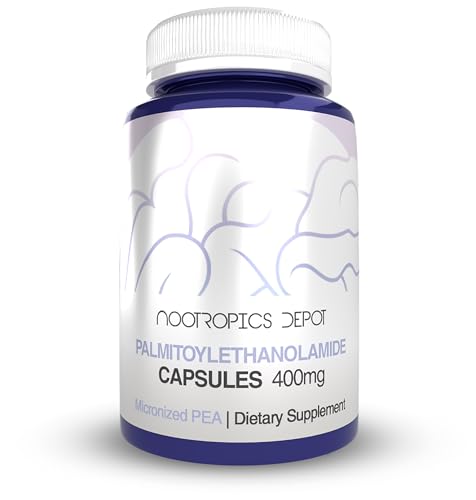
capsules, 300 mg PEA (as Levagen+) per serving: Levagen+ with LipiSperse, a branded PEA ingredient marketed for solubility and absorption - Nootropics Depot Palmitoylethanolamide (PEA) Capsules
capsules, 400 mg micronized PEA per capsule: two or three capsules reach the 600 to 1,200 mg daily range used in trials - Liftmode Palmitoylethanolamide (PEA) Powder
powder, 400 mg per measured scoop: Powder form allows flexible dosing and is significantly cheaper per gram for long-term daily users
As an Amazon Associate we earn from qualifying purchases. PEA quality depends on particle size more than price. Most clinical research used micronized or ultramicronized material, so prefer a product that states its particle size grade or names a branded ingredient such as Levagen+, and check the daily serving reaches the 600 to 1,200 mg used in trials. A label reading only palmitoylethanolamide, with no particle size disclosure, is often standard crystalline powder, and no head-to-head trial has compared standard with micronized PEA, so the size of any absorption difference is unproven [9][10].
A Note on the Evidence
The evidence base for PEA, while promising, includes many small or short-duration studies, and formulation differences between products make comparisons difficult; the mechanisms described here are proposed based on preclinical and clinical research but are not fully proven in all contexts. PEA is a dietary supplement and is not FDA-approved to diagnose, treat, cure, or prevent any disease: anyone with a medical condition, particularly those on immunosuppressants, anticoagulants, or cancer therapies, should speak with a qualified healthcare provider before use.
Frequently Asked Questions
Does PEA work like an opioid or painkiller?
No. PEA does not bind to opioid receptors and is not classified as an analgesic drug. Its proposed effects on pain arise from reducing inflammation and neuroinflammatory signaling at a cellular level, which is a fundamentally different mechanism from opioids or non-steroidal anti-inflammatory drugs (NSAIDs).
Is PPAR-α the only receptor PEA interacts with?
PPAR-α is the best-characterized target and the one most strongly linked to PEA’s anti-inflammatory and analgesic properties. However, research suggests PEA may also interact with GPR55, TRPV1, and indirectly influence CB1 and CB2 cannabinoid receptors by prolonging anandamide activity. The relative importance of these secondary interactions in humans is not yet fully established.

How long does it take for PEA to work?
Based on clinical trial data, meaningful effects on pain measures have typically been observed after several weeks of consistent use, with some studies reporting progressive improvement over one to three months. PEA does not appear to produce immediate acute relief in the way that conventional analgesics do, which is consistent with its mechanism acting through gene expression changes rather than acute receptor blockade.
Is PEA safe to take with other medications?
PEA has demonstrated a favorable safety profile in clinical trials for most participants. However, people taking immunosuppressants, anticoagulants, or chemotherapy agents should consult a physician before use, as potential interactions in these groups have not been adequately studied. This is general information, not personalized medical advice.
Does PEA affect the immune system?
Yes, in part. Mast cell stabilization and modulation of glial cell activity are both immune-related effects. PPAR-α activation also influences gene expression in immune cells. These effects are generally described as modulatory, reducing excessive inflammatory signaling, rather than broadly suppressing immune function, but research in immunocompromised individuals is limited.
What makes PEA different from CBD or other cannabinoids?
PEA and CBD are both lipid-derived molecules that can influence inflammatory pathways, but they have different primary mechanisms. CBD interacts with a broad range of receptors including CB1, CB2, and several non-cannabinoid targets. PEA’s primary mechanism runs through PPAR-α and mast cell stabilization, with only indirect influence on the endocannabinoid system. They are distinct molecules with overlapping but non-identical pharmacology.
References
- Di Stefano V et al. Palmitoylethanolamide: A Multifunctional Molecule for Neuroprotection, Chronic Pain, and Immune Modulation. Biomedicines (2025). PMID 40563990
- Bortoletto R et al. Palmitoylethanolamide supplementation for human health: A state-of-the-art systematic review of Randomized Controlled Trials in patient populations. Brain, behavior, & immunity – health (2025). PMID 39839988
- Kurlyandchik I et al. Plasma and interstitial levels of endocannabinoids and N-acylethanolamines in patients with chronic widespread pain and fibromyalgia: a systematic review and meta-analysis. Pain reports (2022). PMID 36381652
- Darmani NA et al. Involvement of the cannabimimetic compound, N-palmitoyl-ethanolamine, in inflammatory and neuropathic conditions: review of the available pre-clinical data, and first human studies. Neuropharmacology (2005). PMID 15910891
- Vincenzo Di Marzo et al. Palmitoylethanolamide inhibits the expression of fatty acid amide hydrolase and enhances the anti-proliferative effect of anandamide in human breast cancer cells. Biochemical Journal (2001). PMID 11485574
- Sugiura T et al. Evidence that 2-arachidonoylglycerol but not N-palmitoylethanolamine or anandamide is the physiological ligand for the cannabinoid CB2 receptor. Comparison of the agonistic activities of various cannabinoid receptor ligands in HL-60 cells. The Journal of biological chemistry (2000). PMID 10617657
- LoVerme J et al. The search for the palmitoylethanolamide receptor. Life sciences (2005). PMID 15963531
- Lorenzo Di Cesare Mannelli et al. Palmitoylethanolamide Is a Disease-Modifying Agent in Peripheral Neuropathy: Pain Relief and Neuroprotection Share a PPAR-Alpha-Mediated Mechanism. Mediators of Inflammation (2013). PMID 23533304
- Linda Rankin et al. Palmitoylethanolamide for the treatment of pain: pharmacokinetics, safety and efficacy. British Journal of Clinical Pharmacology (2016). PMID 27220803
- Rankin L et al. The Basal Pharmacology of Palmitoylethanolamide. International journal of molecular sciences (2020). PMID 33114698
- Cesare Cremon et al. Randomised clinical trial: the analgesic properties of dietary supplementation with palmitoylethanolamide and polydatin in irritable bowel syndrome. Alimentary Pharmacology & Therapeutics (2017). PMID 28164346
These statements have not been evaluated by the Food and Drug Administration. This information is not intended to diagnose, treat, cure, or prevent any disease. Content is for informational purposes only and is not medical advice; consult a qualified healthcare provider before starting any supplement. As an Amazon Associate we earn from qualifying purchases.