Poor sleep and chronic pain are deeply intertwined. People living with neuropathic pain, fibromyalgia, or persistent back pain often describe nights fractured by discomfort long before they can name what is wrong. Palmitoylethanolamide (PEA), a fatty acid amide the body produces naturally in stressed or injured tissue, has attracted growing scientific interest for its ability to modulate pain and inflammation through pathways that do not involve opioid receptors. A smaller but meaningful thread of that research has begun to examine whether reducing pain with PEA carries observable benefits for sleep.
This article examines what the current evidence actually says about palmitoylethanolamide sleep quality improvement, where the data are strongest, and where important gaps remain. PEA is sold as a dietary supplement and is not approved by the FDA to diagnose, treat, cure, or prevent any disease. Everything here is informational, not medical advice.
Key Takeaways
- PEA is not a sedative, and the one placebo-controlled sleep trial (103 adults with sleep disturbance, 350 mg daily PEA as Levagen+ for 8 weeks) found no difference from placebo on actigraphy or sleep diary measures, so any sleep benefit remains unproven [7].
- An open-label carpal tunnel study with an untreated comparison group and no placebo measured sleep-wake rhythm and found improvements alongside pain reduction[1], while a separate placebo-controlled carpal tunnel trial of PEA 600 mg/day found no improvement in clinical or electrophysiological measures [1][8].
- A PEA-plus-melatonin combination improved sleep in a fibromyalgia pilot study, but separating PEA’s specific contribution from melatonin’s is not yet possible [2].
- Evidence for pain relief with PEA in diabetic neuropathy rests on a small, highly heterogeneous set of studies, and nocturnal symptoms in that condition and in low back pain commonly fragment sleep, so indirect sleep benefits are plausible but untested[3][4][11].
- Most trials used micronized or ultramicronized PEA, but no head-to-head trial has compared forms and there are no published human data on oral bioavailability, so it is not known whether form changes outcomes [9][10].
Why Chronic Pain and Poor Sleep Feed Each Other
Pain and sleep share a bidirectional relationship researchers sometimes call the pain-sleep cycle. Persistent pain (whether from nerve damage, inflammatory conditions, or musculoskeletal injury) fragments sleep architecture, reduces time spent in restorative slow-wave and REM stages, and leaves the nervous system more sensitized the following day. That heightened sensitivity then lowers the pain threshold, making the next night worse still. Breaking this cycle is one reason pain researchers increasingly track sleep as a secondary outcome even when testing a primarily analgesic compound.
PEA enters this picture not as a sedative but as a compound that may reduce the neuroinflammatory signaling underlying certain chronic pain conditions. If pain is the proximate cause of disturbed sleep, an agent that meaningfully reduces pain could plausibly restore more normal sleep: a hypothesis that at least two clinical investigations have begun to test directly.
How PEA Works: Mechanisms Relevant to Pain and Sleep
PEA is synthesized on demand in cells under conditions of stress or injury. Its primary mechanism involves activation of PPAR-α (peroxisome proliferator-activated receptor alpha), a nuclear receptor that downregulates the transcription of pro-inflammatory genes. A second proposed action, described mainly in animal and cell studies, is the stabilization of mast cells [12][13]: peripheral immune cells that release histamine, cytokines, and other mediators capable of sensitizing pain-sensing nerve fibers. By quieting mast cell activity, PEA appears to reduce the cascade that amplifies pain signals before they reach the spinal cord and brain.
Research note: Only in a subgroup analysis of people who took more than 10 minutes to fall asleep at baseline did PEA shorten sleep onset latency versus placebo at weeks 4 and 8; this was not the overall result [7].
PEA also shows peripheral activity at the endocannabinoid system, though it does not bind directly to CB1 or CB2 receptors with high affinity. This profile, anti-neuroinflammatory without opioid or cannabinoid receptor engagement, makes it an interesting long-term candidate for conditions where conventional analgesics carry tolerability concerns. Critically, because PEA is not sedating, any sleep benefit it produces would most likely be mediated through pain reduction rather than through direct action on sleep-promoting circuits.
Sleep Evidence: A Carpal Tunnel Study and the One Placebo-Controlled Sleep Trial
The best-known sleep data in a pain condition come from patients with carpal tunnel syndrome (CTS) [7], a condition characterized by median nerve compression that frequently causes nocturnal pain, tingling, and sleep interruption. In an open-label randomized study of 42 carpal tunnel patients awaiting surgery, ultramicronized PEA was compared with no treatment, with no placebo group, for its effects on both neuropathic pain phenotypes and the sleep-wake rhythm [1]. Patients who received PEA showed measurable improvements in sleep-wake rhythm alongside reductions in pain severity, which fits with, but does not show, pain relief translating into a more normal nocturnal pattern [1][14].
In 103 adults, PEA did not beat placebo on sleep overall, and a benefit appeared only in a subgroup
Placebo-controlled
A double-blind trial in 103 adults with sleep disturbance compared 8 weeks of daily PEA (350 mg Levagen+) with placebo.
No difference at week 8
Sleep quantity and quality, measured by actigraphy and sleep diaries, did not differ between PEA and placebo. Both groups improved similarly.
Slow-to-fall-asleep adults
In a subgroup of 78 adults who took more than 10 minutes to fall asleep at baseline, PEA shortened sleep onset latency versus placebo at weeks 4 and 8 (p < 0.05).
This trial does not show that PEA improves sleep in general.
One randomized trial of the Levagen+ formulation; the subgroup result may not hold up in a trial designed to test it. Source: Rao et al., Sleep science and practice 2021.
Embed this chart
Free to reuse on your site. Copy the code below; please keep the credit link.
CTS is a specific and relatively well-defined neuropathic condition, so these findings do not automatically generalize to all sleep problems. The open-label design also means that placebo effects cannot be fully excluded. That said, using sleep-wake rhythm as an explicit outcome measure, rather than treating it as an afterthought, marks this as one of the more methodologically informative data points currently available in the PEA-sleep literature [1].
The one placebo-controlled trial built around sleep was null on its main outcomes. In 103 adults with sleep disturbance, 8 weeks of 350 mg daily PEA (Levagen+) was compared with placebo, and sleep quantity and quality measured by actigraphy and sleep diaries did not differ between groups at week 8; both groups improved similarly [7].
PEA Combined with Melatonin in Fibromyalgia
Fibromyalgia is a syndrome defined partly by widespread musculoskeletal pain and partly by pervasive sleep disturbance; the two are so intertwined that sleep quality forms part of composite disease severity scores. A 2024 pilot study tested PEATONIDE, a fixed combination of palmitoylethanolamide and melatonin, in fibromyalgia patients and reported improvements in pain, sleep, and disability measures [2].
Because melatonin itself has established evidence for shifting circadian phase and shortening sleep-onset latency, it is not possible from this trial to separate how much of the sleep benefit came from PEA versus melatonin. The pilot design also limits the strength of any conclusion. What the study shows is that 50 fibromyalgia patients improved from their own baselines on pain, insomnia severity and disability scores while taking 1200 mg PEA and 0.2 mg melatonin daily, with no placebo group [2]. Larger, placebo-controlled trials separating the two active components would be needed to attribute specific sleep effects to PEA alone.
Analgesic Evidence Across Pain Conditions: Indirect Sleep Implications
A broader body of research supports PEA’s analgesic activity in several pain syndromes where nocturnal symptoms are common. A 2026 systematic review of PEA for diabetic neuropathic pain found only three studies with 188 patients and a large pooled pain reduction, but with very high heterogeneity (I2 = 96%), so the pooled figure should be treated cautiously[3], and a separate trial of Levagen+ in 70 adults with diabetic neuropathic pain, supplied and sponsored by Gencor Pacific, reported a difference from placebo despite a significant placebo response[5]. Diabetic peripheral neuropathy is notorious for symptom flares at night (burning, tingling, and cramping that peak when patients try to rest) making effective pain relief in this population directly relevant to sleep quality, even when sleep was not a primary trial endpoint.
In chronic neuropathic low back pain, a 2026 study using a phospholipid-based PEA delivery system reported meaningful reductions in pain and supported clinical benefit over the treatment course [4]. Low back pain is among the most common causes of sleep fragmentation in adults, so analgesic success here carries clear indirect sleep implications. A migraine prevention study using a PEA-based nutraceutical (Calmux®) reported reductions in migraine frequency and intensity [6]; since migraine attacks frequently shatter sleep architecture and disturb circadian rhythms, pain prevention in this population also carries indirect sleep relevance, though this was a small open-label pilot study without a control group.

Formulation and Bioavailability: Why They Matter for Clinical Outcomes
PEA is lipophilic, it dissolves in fats rather than water, which historically limited its oral bioavailability. Early research used micronized or ultra-micronized forms, intended to increase particle surface area, although a pharmacology review found no published information on PEA’s oral bioavailability [10]. More recently, phospholipid-based delivery systems have been developed to optimize solubility and systemic exposure; one such formulation was evaluated in the 2026 low-back-pain study and demonstrated robust clinical outcomes [4]. The carpal tunnel sleep study used ultramicronized PEA[1], but with no comparison against other forms, nothing shows that the form mattered [9][10].
When evaluating a PEA supplement, the physical form (standard powder, ultra-micronized, or phospholipid-based) may influence how much active compound reaches circulation and, by extension, whether clinical effects like pain relief and any downstream sleep improvements are achievable. No head-to-head trial has compared micronized with unmicronized PEA, and a pharmacology review says unmicronised, micronised and ultra-micronised PEA are all absorbed after oral dosing, so whether form changes the result is unknown. It is still worth noting which form a study used when interpreting results [9][10].
🛒 Where to Buy Palmitoylethanolamide (PEA)
- Wellness Resources PEA Ultra with Levagen+
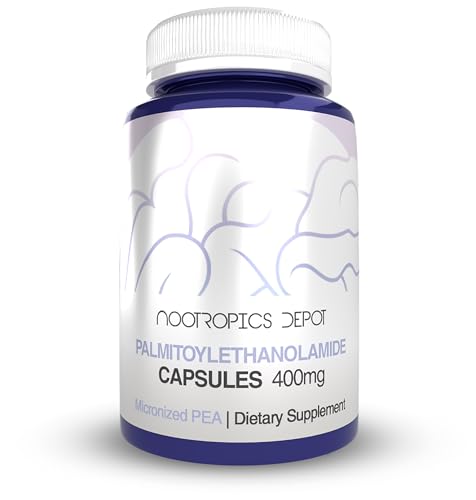
capsules, 300 mg PEA (as Levagen+) per serving: Levagen+ with LipiSperse, a branded PEA ingredient marketed for solubility and absorption - Nootropics Depot Palmitoylethanolamide (PEA) Capsules
capsules, 400 mg micronized PEA per capsule: two or three capsules reach the 600 to 1,200 mg daily range used in trials - Liftmode Palmitoylethanolamide (PEA) Powder
powder, 400 mg per measured scoop: Powder form allows flexible dosing and is significantly cheaper per gram for long-term daily users
As an Amazon Associate we earn from qualifying purchases. PEA quality depends on particle size more than price. Most clinical research used micronized or ultramicronized material, so prefer a product that states its particle size grade or names a branded ingredient such as Levagen+, and check the daily serving reaches the 600 to 1,200 mg used in trials. A label reading only palmitoylethanolamide, with no particle size disclosure, may be standard crystalline powder, but no published human data show how much any PEA form is absorbed.
A Note on the Evidence
The evidence linking PEA to sleep improvement is preliminary and largely indirect; the strongest sleep-specific data come from small or open-label studies in pain populations, not from trials designed primarily to evaluate sleep outcomes. Individuals taking immunosuppressants, anticoagulants, or chemotherapy drugs should consult a physician before use, and this article does not constitute medical advice.
Frequently Asked Questions
Does PEA directly cause sleepiness?
No. PEA does not appear to act on the central nervous system pathways, such as GABA or adenosine signaling, that produce sedation. Its proposed sleep benefit is indirect: by reducing pain and neuroinflammatory signaling, PEA may remove a major physiological barrier to normal sleep. The carpal tunnel syndrome study that measured sleep-wake rhythm found improvements that tracked alongside pain reduction rather than occurring as an independent sedative effect [1].

What evidence exists for PEA improving sleep in fibromyalgia?
A 2024 pilot study tested a fixed combination of PEA and melatonin (PEATONIDE) in fibromyalgia patients and reported improvements in pain, sleep, and disability [2]. Because melatonin is itself a sleep-modulating agent, the study cannot confirm that PEA alone drives the sleep benefit. It does support the concept that a PEA-containing regimen can improve sleep outcomes in a population severely affected by both pain and sleep disruption.
Is there evidence PEA helps with nerve pain that worsens at night?
Yes, in specific populations. A systematic review found only three studies with 188 patients and a large pooled pain reduction with very high heterogeneity (I2 = 96%)[3], and a placebo-controlled trial of Levagen+ supplied and sponsored by Gencor Pacific reported a difference from placebo despite a significant placebo response[5][3]. Diabetic peripheral neuropathy characteristically worsens at night, so effective pain control in these patients would reasonably be expected to reduce nocturnal sleep disruption, though sleep was not the primary endpoint in those trials.
How long does PEA take to produce effects?
Clinical trials have generally used treatment periods of several weeks to a few months before measuring outcomes. The carpal tunnel study assessed changes in sleep-wake rhythm over a sustained treatment course rather than expecting acute effects [1]. PEA is not a fast-acting analgesic; its anti-neuroinflammatory mechanism likely requires consistent dosing over time for clinical effects to become apparent.
Are there safety concerns with taking PEA alongside sleep or pain medications?
PEA has demonstrated a generally favorable tolerability profile in published clinical trials across multiple pain populations [3][5]. However, interaction data are limited for individuals on immunosuppressants, anticoagulants, or chemotherapy, and those groups should consult a physician before use. If you are already using prescription sleep aids or analgesics, discussing PEA with a healthcare provider before combining it is the prudent approach.
Does the form of PEA (micronized vs. standard) matter for outcomes?
That is not known: no head-to-head trial has compared micronized with unmicronized PEA, and there are no published human data on oral bioavailability [9][10]. Ultra-micronized PEA was the form used in the carpal tunnel sleep study [1], and a phospholipid-based system designed for enhanced absorption showed strong results in chronic neuropathic back pain [4]. Until formal [9][10] head-to-head bioavailability comparisons are available, choosing a product with a documented enhanced-absorption formulation is a reasonable practical consideration.
References
- Evangelista M et al. Ultra-micronized Palmitoylethanolamide Effects on Sleep-wake Rhythm and Neuropathic Pain Phenotypes in Patients with Carpal Tunnel Syndrome: An Open-label, Randomized Controlled Study. CNS & neurological disorders drug targets (2018). PMID 29676237
- Terribili R et al. A Fixed Combination of Palmitoylethanolamide and Melatonin (PEATONIDE) for the Management of Pain, Sleep, and Disability in Patients with Fibromyalgia: A Pilot Study. Nutrients (2024). PMID 39203921
- Prado MB Jr et al. Efficacy, safety, and tolerability of palmitoylethanolamide in the management of diabetic neuropathic pain: a systematic review and meta-analysis. Journal of diabetes and metabolic disorders (2026). PMID 41664677
- Khan A et al. Phospholipid-Based Delivery System Optimizes the Solubility and Systemic Exposure of Palmitoylethanolamide and Supports Clinical Benefits in Chronic Neuropathic Low Back Pain. Biomedicines (2026). PMID 41751279
- Pickering E et al. A randomized controlled trial assessing the safety and efficacy of palmitoylethanolamide for treating diabetic-related peripheral neuropathic pain. Inflammopharmacology (2022). PMID 36057884
- Hernández AG et al. Palmitoylethanolamide-based nutraceutical Calmux® in preventive treatment of migraine. Clinical neurology and neurosurgery (2022). PMID 35598579
- Rao A et al. Palmitoylethanolamide for sleep disturbance. A double-blind, randomised, placebo-controlled interventional study. Sleep science and practice (2021). PMID 34522787
- Faig-Martí J et al. Use of palmitoylethanolamide in carpal tunnel syndrome: a prospective randomized study. Journal of orthopaedics and traumatology : official journal of the Italian Society of Orthopaedics and Traumatology (2017). PMID 28299455
- Linda Rankin et al. Palmitoylethanolamide for the treatment of pain: pharmacokinetics, safety and efficacy. British Journal of Clinical Pharmacology (2016). PMID 27220803
- Rankin L et al. The Basal Pharmacology of Palmitoylethanolamide. International journal of molecular sciences (2020). PMID 33114698
- Basem JI et al. A Brief Review on the Novel Therapies for Painful Diabetic Neuropathy. Current pain and headache reports (2023). PMID 37392335
- Stephen D. Skaper et al. Mast cell-glia axis in neuroinflammation and therapeutic potential of the anandamide congener palmitoylethanolamide. Philosophical Transactions of the Royal Society B Biological Sciences (2012). PMID 23108549
- Roncati L et al. Micronized / ultramicronized palmitoylethanolamide (PEA) as natural neuroprotector against COVID-19 inflammation. Prostaglandins & other lipid mediators (2021). PMID 33636368
- Faig-Martí J et al. Measuring the placebo effect in carpal tunnel syndrome. Journal of orthopaedics and traumatology : official journal of the Italian Society of Orthopaedics and Traumatology (2020). PMID 31993783
These statements have not been evaluated by the Food and Drug Administration. This information is not intended to diagnose, treat, cure, or prevent any disease. Content is for informational purposes only and is not medical advice; consult a qualified healthcare provider before starting any supplement. As an Amazon Associate we earn from qualifying purchases.