Endometriosis affects roughly one in ten reproductive-age women and is one of the most common causes of chronic pelvic pain, painful periods, and diminished quality of life. Conventional options, hormonal suppression and surgery, carry meaningful side effects and often deliver incomplete or temporary relief, leaving a significant unmet need for well-tolerated adjunct approaches.
Palmitoylethanolamide (PEA), an endogenous fatty acid amide the body already produces in response to cellular stress, has accumulated a modest but specific clinical literature in endometriosis over the past fifteen years. The evidence is preliminary and the trials are small, and most used a PEA plus polydatin combination rather than PEA alone. The mechanism is plausible, and trials report few adverse events, though most studies were short [8][12][13]. This article summarizes what the research actually shows, where the gaps are, and what women should realistically expect from the science.
Key Takeaways
- PPAR-alpha is the main receptor proposed for PEA; mast cell effects come mostly from lab and animal work, and in an IBS trial of PEA plus polydatin mucosal mast cell counts did not change. Whether either explains endometriosis pain has not been shown [14][15].
- Women with endometriosis show altered endocannabinoid-related lipid mediator levels across the menstrual cycle, offering biological plausibility for PEA supplementation [1].
- A 2017 meta-analysis of micronized PEA/polydatin trials found clinically relevant improvements in chronic pelvic pain and dysmenorrhea, though only four studies of poor quality were available [2].
- Quality-of-life and sexual health outcomes have improved alongside pain in some trials, suggesting a broader potential benefit beyond raw pain scores [3].
- PEA is not FDA-approved for endometriosis; the evidence base remains preliminary and should complement, not replace, conventional medical care.
Why Endometriosis Pain Is So Difficult to Control
In endometriosis, tissue resembling the uterine lining grows outside the uterus, triggering local inflammation, adhesion formation, and progressive sensitization of pelvic nerves. This neuroinflammatory cycle (driven by mast cells, prostaglandins, and pro-inflammatory cytokines) means that pain often persists even after lesions are surgically removed. Conventional analgesics and hormonal therapies do not fully address the underlying neuroimmune dysfunction for many patients.
Research has found that women with endometriosis display elevated circulating levels of endocannabinoid-related lipid mediators across the menstrual cycle compared to women without the condition [1]. This biochemical difference suggests the body’s own lipid-signaling systems are dysregulated in endometriosis, providing a rationale for interventions that target these pathways.
How PEA May Address Endometriosis-Related Pain: Proposed Mechanisms
PEA is thought to work primarily by activating peroxisome proliferator-activated receptor-alpha (PPAR-α), a nuclear receptor whose activation downregulates genes responsible for producing inflammatory mediators. Separately, PEA stabilizes mast cells, key orchestrators of peripheral and central sensitization, reducing local release of histamine, nerve growth factor, and cytokines. Both actions are directly relevant to the neuroinflammatory environment created by endometriotic lesions.
Research note: Patients in this small study used fewer NSAID painkillers while taking PEA plus polydatin [6].
Importantly, PEA does not bind opioid receptors and carries no known dependence risk. It does not inhibit cyclooxygenase enzymes the way NSAIDs do, so it is not expected to cause gastrointestinal injury or cardiovascular effects associated with long-term NSAID use. Trials report few adverse events, mostly mild gastrointestinal upset and dizziness, but most studies were short and long-term safety data are thin, which matters for a condition that often requires long-term management [16][12][13].
Clinical Evidence: PEA and Polydatin Combinations
The most studied formulation in endometriosis is co-micronized PEA paired with trans-polydatin, a resveratrol glycoside with antioxidant properties. Preliminary clinical observations published in 2010 reported reductions in chronic pelvic pain scores among women with laparoscopically confirmed endometriosis receiving this combination [4]. A pilot study in women who had undergone laparoscopic assessment found that the PEA-polydatin combination was associated with meaningful pain reduction [5]. Early Italian-language data from 2013 added further preliminary support for micronized PEA-transpolydatin in this population [6][7].
The main synthesis to date is a 2017 meta-analysis that pooled results from available clinical trials of micronized PEA/polydatin in women with endometriosis and found clinically relevant improvements in chronic pelvic pain and dysmenorrhea [2]. The authors noted that only four studies of poor quality were available, and they concluded that more studies are warranted before the efficacy can be judged.
A 2022 responder analysis examined which women derived the most benefit from co-micronized PEA/polydatin, identifying baseline characteristics that predicted greater pain relief [8]. This kind of analysis is an important step toward understanding for whom supplementation is most likely to be worthwhile, and it begins to address the reality that response to any intervention in chronic pain conditions is heterogeneous.
Ultramicronized PEA and Multi-Ingredient Formulations
Particle size is often said to affect PEA absorption, but no published human data describe its oral bioavailability, and no head-to-head trial has compared micronized with unmicronized PEA [17][12]. An open-label pilot study directly compared ultramicronized PEA alone against co-micronized PEA/polydatin in women with endometriosis, assessing both pelvic pain and quality of life [9]. Both formulations were associated with improvements over the treatment period, though the open-label design makes it impossible to isolate the supplement effect from natural disease fluctuation or placebo response.
Other multi-ingredient approaches have been investigated in overlapping patient populations. One study evaluated a combination of lipoic acid, PEA, and myrrh extract in women with chronic pelvic pain and endometriosis, reporting favorable pain outcomes [10]. A separate study paired PEA with alpha-lipoic acid and found improvements in pelvic pain, quality of life, and sexual health measures [3]. When multiple active ingredients are combined, attributing outcomes to PEA specifically becomes difficult, but these studies reflect how PEA is commonly used in practice.
Quality of Life and Sexual Health: Looking Beyond Pain Scores
Endometriosis disrupts far more than a number on a pain scale. It impairs sexual function, work capacity, mental health, and social participation. Some PEA trials have specifically measured these broader domains. Research using PEA combined with alpha-lipoic acid reported improvements in quality of life and sexual health outcomes in women with chronic pelvic pain, not only reductions in pain intensity [3]. The responder analysis was based on pain score reductions [8].
For a condition that affects women across decades of reproductive life, whether a supplement supports functioning across these dimensions matters. The existing studies are too small and too short to draw firm conclusions, but the generally positive direction across quality-of-life measures is worth noting as future larger trials are designed.

Honest Assessment: What the Evidence Supports and Where the Gaps Are
It is essential to be transparent about what the current evidence does and does not establish. Most PEA endometriosis studies are small, open-label or uncontrolled, and conducted by overlapping research groups, primarily in Italy. A double-blind, placebo-controlled trial in 61 women after laparoscopic surgery tested a PEA plus transpolydatin combination against placebo and a celecoxib course. Pain fell in every group including placebo, and celecoxib reduced pelvic pain more than the combination, so causality cannot be firmly established [5]. Placebo effects in chronic pain trials are substantial, often 20 to 30% on validated scales, and open-label studies are particularly susceptible to them.
It is also worth contextualizing PEA within the broader landscape of endocannabinoid-related interventions for gynecologic pain. A 2022 systematic review of medical cannabis for gynecologic pain conditions noted the overall shortage of high-quality evidence across endocannabinoid-pathway interventions in this domain [11]. PEA, while distinct from cannabis, shares a similar evidence challenge: a plausible mechanism and consistent clinical signals alongside an evidence base that has not yet been tested at the scale and rigor needed to support definitive recommendations.
The honest summary is this: the existing studies mostly report improvement on a PEA plus polydatin combination, but pain also fell on placebo in the one placebo-controlled trial, celecoxib did better, and long-term safety data are thin [5][12]. That is reason enough for ongoing research and for some women to discuss it with their provider. It is not reason to present PEA as a proven treatment for endometriosis.
🛒 Where to Buy Palmitoylethanolamide (PEA)
- Wellness Resources PEA Ultra with Levagen+
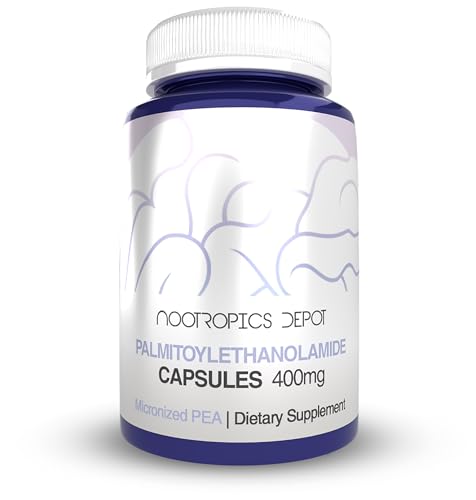
capsules, 300 mg PEA (as Levagen+) per serving: Levagen+ with LipiSperse, a branded PEA ingredient marketed for solubility and absorption - Nootropics Depot Palmitoylethanolamide (PEA) Capsules
capsules, 400 mg micronized PEA per capsule: two or three capsules reach the 600 to 1,200 mg daily range used in trials - Liftmode Palmitoylethanolamide (PEA) Powder
powder, 400 mg per measured scoop: Powder form allows flexible dosing and is significantly cheaper per gram for long-term daily users
As an Amazon Associate we earn from qualifying purchases. PEA quality depends on particle size more than price. Most clinical research used micronized or ultramicronized material, so prefer a product that states its particle size grade or names a branded ingredient such as Levagen+, and check the daily serving reaches the 600 to 1,200 mg used in trials. A label reading only palmitoylethanolamide, with no particle size disclosure, may be standard crystalline powder, but no published human data show how much any PEA form is absorbed.
A Note on the Evidence
The clinical evidence for PEA in endometriosis currently consists of small open-label pilot studies, one small placebo-controlled trial of a PEA plus transpolydatin combination, and a single meta-analysis of those limited trials; large placebo-controlled randomized trials have not been completed [5][2], and PEA is not FDA-approved to diagnose, treat, cure, or prevent endometriosis or any other condition. Women who are pregnant, breastfeeding, or taking immunosuppressants, anticoagulants, or chemotherapy agents should consult a qualified healthcare provider before use, and PEA supplementation should not replace prescribed medical or surgical treatment.
Frequently Asked Questions
What form of PEA has been most studied for endometriosis?
Co-micronized PEA combined with trans-polydatin is the formulation with the most published data, including a 2017 meta-analysis [2]. Ultramicronized PEA alone has also been compared against the combination formulation in an open-label pilot study [9]. No head-to-head trial has compared particle sizes, so it is not known whether formulation type changes efficacy [12][17].
How does PEA differ from hormonal treatments for endometriosis?
PEA does not influence estrogen or progesterone levels and carries none of the hormonal side effects (such as bone density loss, mood changes, or menopausal symptoms) associated with GnRH agonists or progestins. Its proposed mechanism targets neuroinflammation and mast cell activity rather than hormonal suppression of the endometrium. It is a supplement, not a replacement for hormonal therapy, and the two are not mutually exclusive.
Is there a meta-analysis supporting PEA for endometriosis pain?
Yes. A 2017 meta-analysis pooled data from available clinical trials and found that micronized PEA/polydatin treatment was associated with clinically relevant improvements in chronic pelvic pain and dysmenorrhea [2]. The authors acknowledged the limitations of the underlying trials, including that only four studies of poor quality were available, so the findings should be interpreted with appropriate caution.
Does PEA help with sexual pain related to endometriosis?
Some trials have included sexual health as an endpoint alongside pain. Research combining PEA with alpha-lipoic acid found improvements in sexual health measures in women with chronic pelvic pain, in addition to pain and general quality-of-life benefits [3]. These findings are preliminary but suggest the benefit may extend to dyspareunia and related symptoms.
Are there any safety concerns with PEA for endometriosis?
PEA has shown a favorable tolerability profile across clinical trials, which is one reason it has attracted interest for long-term use in a chronic condition. It does not engage opioid receptors, is not a COX inhibitor, and does not carry hormonal activity. Women taking immunosuppressants, anticoagulants, or chemotherapy should consult a physician before adding any supplement, including PEA. This is informational content, not medical advice.
Why are most PEA endometriosis studies from Italy?
The bulk of published trials were conducted by Italian research groups, likely because PEA has been more widely used as a nutraceutical in Europe than in North America or Asia. This geographic concentration is a meaningful limitation: independent replication across diverse populations and healthcare settings is needed to confirm whether the findings generalize broadly.
References
- Sanchez AM et al. Elevated Systemic Levels of Endocannabinoids and Related Mediators Across the Menstrual Cycle in Women With Endometriosis. Reproductive sciences (Thousand Oaks, Calif.) (2016). PMID 26887427
- Indraccolo U et al. Micronized palmitoylethanolamide/trans-polydatin treatment of endometriosis-related pain: a meta-analysis. Annali dell'Istituto superiore di sanita (2017). PMID 28617258
- Caruso S et al. Chronic pelvic pain, quality of life and sexual health of women treated with palmitoylethanolamide and α-lipoic acid. Minerva ginecologica (2015). PMID 26491823
- Indraccolo U et al. Effect of palmitoylethanolamide-polydatin combination on chronic pelvic pain associated with endometriosis: preliminary observations. European journal of obstetrics, gynecology, and reproductive biology (2010). PMID 20176435
- Cobellis L et al. Effectiveness of the association micronized N-Palmitoylethanolamine (PEA)-transpolydatin in the treatment of chronic pelvic pain related to endometriosis after laparoscopic assessment: a pilot study. European journal of obstetrics, gynecology, and reproductive biology (2011). PMID 21601979
- Lo Monte G et al. [Administration of micronized palmitoylethanolamide (PEA)-transpolydatin in the treatment of chronic pelvic pain in women affected by endometriosis: preliminary results]. Minerva ginecologica (2013). PMID 24051945
- Lo Monte G et al. [Administration of MICRONIZED PALMITOYLETHANOLAMIDE (PEA)-transpolydatin in the treatment of chronic pelvic pain in women affected by endometriosis: preliminary results.]. Minerva ginecologica (2013). PMID 23486373
- Indraccolo U et al. Looking for Responders among Women with Chronic Pelvic Pain Treated with a Comicronized Formulation of Micronized Palmitoylethanolamide and Polydatin. BioMed research international (2022). PMID 35578721
- Stochino Loi E et al. Effect of ultramicronized-palmitoylethanolamide and co-micronized palmitoylethanolamide/polydatin on chronic pelvic pain and quality of life in endometriosis patients: An open-label pilot study. International journal of women's health (2019). PMID 31496832
- De Leo V et al. Role of a natural integrator based on lipoic acid, palmitoiletanolamide and myrrh in the treatment of chronic pelvic pain and endometriosis. Minerva ginecologica (2019). PMID 30696240
- Liang AL et al. Medical Cannabis for Gynecologic Pain Conditions: A Systematic Review. Obstetrics and gynecology (2022). PMID 35104069
- Linda Rankin et al. Palmitoylethanolamide for the treatment of pain: pharmacokinetics, safety and efficacy. British Journal of Clinical Pharmacology (2016). PMID 27220803
- Earle R. Nestmann Safety of micronized palmitoylethanolamide (microPEA): lack of toxicity and genotoxic potential. Food Science & Nutrition (2016). PMID 28265364
- LoVerme J et al. The search for the palmitoylethanolamide receptor. Life sciences (2005). PMID 15963531
- Cesare Cremon et al. Randomised clinical trial: the analgesic properties of dietary supplementation with palmitoylethanolamide and polydatin in irritable bowel syndrome. Alimentary Pharmacology & Therapeutics (2017). PMID 28164346
- Wang Y et al. Palmitoylethanolamide in the Treatment of Pain and Its Clinical Application Prospects. Drug design, development and therapy (2025). PMID 40827226
- Rankin L et al. The Basal Pharmacology of Palmitoylethanolamide. International journal of molecular sciences (2020). PMID 33114698
These statements have not been evaluated by the Food and Drug Administration. This information is not intended to diagnose, treat, cure, or prevent any disease. Content is for informational purposes only and is not medical advice; consult a qualified healthcare provider before starting any supplement. As an Amazon Associate we earn from qualifying purchases.