Parents ask this question for an obvious reason. Palmitoylethanolamide is described everywhere as well tolerated, it is present in food, and a child with recurring stomach pain is a household with a lot of motivation to try something.
The only randomized controlled trial of PEA in children with irritable bowel syndrome that we found is reasonably well designed, [5] it ran across three hospital centres, and it produced a positive result on both symptoms and safety.
It also tested a combination product rather than PEA alone, which means it answers a narrower question than the one most parents are asking.
Key Takeaways
- A multicentre, double-blind, placebo-controlled, parallel-arm trial enrolled 70 children aged 10 to 17 meeting Rome IV criteria for pediatric irritable bowel syndrome across three Italian pediatric gastroenterology centres [1].
- Treatment was co-micronized PEA plus polydatin three times daily for 12 weeks, against placebo [1].
- Significantly more children in the treatment group achieved complete remission at 12 weeks, defined as a symptom severity score below 75 (P = 0.015), with particular benefit in the diarrhea subtype (P = 0.01) [1].
- No adverse events were recorded during the study period [1]. That is a real safety datapoint in 70 children over 12 weeks, and it is not a general clearance for pediatric use.
- The product was PEA combined with polydatin, so the trial cannot tell you what PEA alone does in children [1].
The Pediatric IBS Trial [5]
The study aimed to evaluate the efficacy and safety of co-micronized palmitoylethanolamide and polydatin for abdominal pain symptoms in pediatric patients with irritable bowel syndrome [1]. It was conducted at three Italian pediatric gastroenterology centres using a double-blind, placebo-controlled, parallel-arm design [1].
Participants were aged 10 to 17 years and met Rome IV criteria for pediatric irritable bowel syndrome, which is the current formal diagnostic standard rather than a loose description of stomach aches [1]. They were randomly allocated one to one to receive either the co-micronized product or placebo, three times daily, over 12 weeks [1].
Severity was measured with the IBS Severity Scoring System at enrollment and again at 4, 8 and 12 weeks [1]. Abdominal pain frequency was scored from 1 to 7 days per week, and stool consistency was classified with the Bristol Stool Scale to assign IBS subtypes [1]. The primary outcome was the percentage of patients achieving complete remission, defined as a severity score below 75 points after 12 weeks [1].
Everything in that description is a mark of a properly run trial: a validated diagnostic standard, a pre-specified primary outcome with a numeric threshold, multiple assessment points, and blinding on both sides.

What It Found
The study involved 70 children, 34 receiving the co-micronized therapy and 36 receiving placebo [1]. Compared with placebo, the treatment group had significantly more patients achieving complete remission after 12 weeks, with P = 0.015 [1]. The benefit was particularly evident in the diarrhea subtype, at P = 0.01 [1]. The treatment group also experienced a significant reduction in abdominal pain intensity and frequency compared with placebo [1].
In a 70-child trial, more children on PEA plus polydatin reached complete remission than on placebo
70 children with IBS
Children aged 10 to 17 with Rome IV pediatric IBS at three Italian centres.
34 vs 36
34 received co-micronized PEA plus polydatin and 36 received placebo.
Remission, P = 0.015
More children on the combination reached complete remission after 12 weeks, with particular benefit in the IBS-diarrhea subtype (P = 0.01).
No adverse events recorded
No adverse events were recorded during the study period.
One small randomized trial of a combination product gave a positive remission result with no recorded adverse events.
A single multicentre randomized controlled trial. Source: Di Nardo et al., Nutrition (Burbank, Los Angeles County, Calif.) 2024.
Embed this chart
Free to reuse on your site. Copy the code below; please keep the credit link.
Research note: A structured narrative review of PEA and the related compound adelmidrol in children identified 17 studies with 2,530 patients, of whom 1,772 received PEA (oral or topical) and 54 received adelmidrol [5].
The authors conclude that co-micronized PEA and polydatin is a safe and effective treatment for abdominal pain symptoms in pediatric IBS [1].
The subtype finding is worth pausing on. IBS is not one condition, and treatments that help the diarrhea-predominant form often do nothing for the constipation-predominant form. A parent whose child has the constipation subtype should read this trial as much weaker evidence for their situation than the headline suggests.
The Safety Signal, Stated Precisely
No adverse events were recorded during the study period [1].
That sentence is the reason this article exists, and it deserves to be handled carefully in both directions.
What it supports: 70 children aged 10 to 17, monitored across three hospital centres in a blinded trial, took this product three times daily for 12 weeks without recorded adverse events. That is real, prospectively collected, clinically supervised safety data in a pediatric population, which is more than most supplements have at any age.
What it does not support: a general statement that PEA is safe for children. The trial studied ages 10 to 17, so it says nothing about younger children or infants. It ran 12 weeks, so it says nothing about years of continuous use. It enrolled 70 children, which is far too few to detect uncommon adverse events. And it tested a specific co-micronized combination product at a specific dosing schedule, not PEA capsules generally.
Other pediatric data are weaker. An open-label Italian pilot gave 600 mg a day of ultramicronized PEA for three months to 70 children with migraine without aura; one child developed mild side effects (nausea and floating), nine stopped treatment early, and the authors say the lack of a placebo group prevents a definitive conclusion about efficacy. Topical PEA in children caused only transient stinging in a few cases. An older unpublished report summarized in a later paper describes five hospitalized children given 50 mg per kg for 2 weeks with no side effects [7][5][6].
The broader pharmacology is consistent with a benign profile. PEA is described as very well tolerated in humans [2], and one review states that all human studies to date report it to be well tolerated and without adverse effects[3], although the authors of a toxicology paper note that most human PEA studies were designed to test efficacy rather than safety and were short term. Those statements are drawn overwhelmingly from adult data [3][6].
Why the Polydatin Matters
The intervention was co-micronized PEA plus polydatin, not PEA [1]. Polydatin is a resveratrol derivative, and it is present in the formulation because someone expected it to contribute.
This is the same interpretive problem that runs through most of the PEA literature. The smell-loss trials used PEA with luteolin. Several pelvic pain studies used PEA with polydatin. The prostatitis studies used PEA with alpha-lipoic acid or with plant extracts. In each case the trial result belongs to the combination, and attributing it to PEA alone is an assumption rather than a finding.
For a parent, the practical translation is direct. A positive trial of PEA plus polydatin is not evidence for a plain PEA capsule bought off a shelf, at a different dose, on a different schedule.
The Mechanism Behind Testing It in the Gut
Gut research on PEA has a real experimental basis. Work published in Gut used mouse models of colitis, colonic biopsies from ulcerative colitis patients, and primary cultures of mouse and human enteric glial cells to show that PEA improves colon inflammation by targeting the S100B and TLR4 axis on enteric glia, causing downstream inhibition of NF-kB-dependent inflammation, with effects abolished by PPAR-alpha antagonists but not PPAR-gamma antagonists [4].
That is laboratory work in tissue and animals, not a trial in patients, and this site treats it separately for that reason. It does explain why researchers thought a gut trial was worth running, and it is a more specific rationale than the generic anti-inflammatory story.
What a Parent Should Take From This
Recurrent abdominal pain in a child needs a diagnosis before it needs a supplement. The trial recruited children who met formal Rome IV criteria for IBS [1], which means someone had already ruled out the conditions that mimic it. Supplementing a child whose stomach pain has not been evaluated risks delaying a real diagnosis.
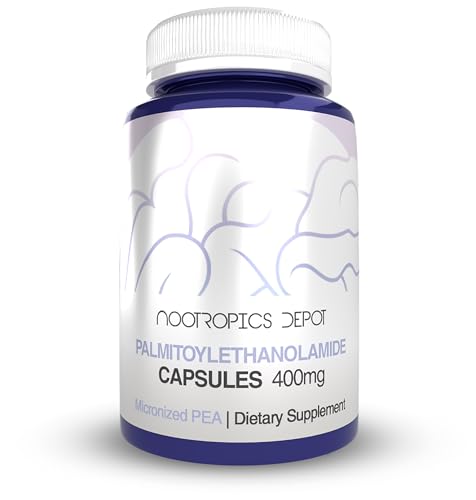
Where a diagnosis exists, this trial is a genuine and reasonably encouraging piece of evidence for one specific combination product over 12 weeks, strongest in the diarrhea subtype [1]. Any decision to use it belongs with the child’s pediatrician or pediatric gastroenterologist, who can weigh it against the alternatives and supervise the trial period. That is not a disclaimer for its own sake. It is what the trial itself did: every child in it was managed inside a pediatric gastroenterology service.
Frequently Asked Questions
Is PEA safe for children?
One randomized trial in 70 children aged 10 to 17 recorded no adverse events over 12 weeks with a co-micronized PEA and polydatin product [1]. That is meaningful but narrow evidence, and it is not a general safety clearance for all ages, doses or durations.
What age range was studied?
Ages 10 to 17 years[1]. No randomized data in younger children with irritable bowel syndrome were found, although a review describes 1970s double-blind placebo-controlled trials of PEA against respiratory infections in young children [5].
Was it PEA on its own?
No. The product was co-micronized PEA plus polydatin, given three times daily [1]. The result belongs to the combination.
Which children benefited most?
Benefit was particularly noted in the diarrhea subtype of IBS, at P = 0.01, compared with P = 0.015 for complete remission overall [1].
How long did the trial run?
12 weeks, with severity assessed at 4, 8 and 12 weeks and complete remission measured at the 12-week endpoint [1].
References
- Di Nardo G, Bernardo L, Cremon C, et al. Palmitoylethanolamide and polydatin in pediatric irritable bowel syndrome: A multicentric randomized controlled trial. Nutrition (2024). PMID 38479039
- Rankin L, Fowler CJ. The Basal Pharmacology of Palmitoylethanolamide. Int J Mol Sci (2020). PMID 33114698
- Clayton P, Hill M, Bogoda N, et al. Palmitoylethanolamide: A Natural Compound for Health Management. Int J Mol Sci (2021). PMID 34069940
- Esposito G, Capoccia E, Turco F, et al. Palmitoylethanolamide improves colon inflammation through an enteric glia/toll like receptor 4-dependent PPAR-alpha activation. Gut (2014). PMID 24082036
- Vittori A et al. ALIAmides and pediatric health: a structured narrative review. Frontiers in pharmacology (2026). PMID 42812398
- Earle R. Nestmann Safety of micronized palmitoylethanolamide (microPEA): lack of toxicity and genotoxic potential. Food Science & Nutrition (2016). PMID 28265364
- Papetti L et al. Tolerability of Palmitoylethanolamide in a Pediatric Population Suffering from Migraine: A Pilot Study. Pain research & management (2020). PMID 32377286
These statements have not been evaluated by the Food and Drug Administration. This information is not intended to diagnose, treat, cure, or prevent any disease. Content is for informational purposes only and is not medical advice; consult a qualified healthcare provider before starting any supplement. As an Amazon Associate we earn from qualifying purchases.