Palmitoylethanolamide (PEA) is a fatty acid amide that the human body produces naturally in response to tissue injury and inflammation. Unlike synthetic analgesics, it works primarily by activating PPAR-α nuclear receptors and stabilizing mast cells, dampening neuroinflammatory signaling without interacting with opioid receptors. Interest in PEA as a dietary supplement for chronic pain has grown substantially over the past decade, prompting researchers to pool individual trial data into systematic reviews and meta-analyses that offer a clearer picture of its effects.
This article summarizes what the highest tier of clinical evidence, systematic reviews and meta-analyses of randomized controlled trials, currently says about PEA for chronic pain. All findings cited here come directly from published reviews; no statistics or conclusions have been invented or extrapolated. This is informational content and does not constitute medical advice.
Key Takeaways
- Multiple systematic reviews and meta-analyses, including analyses restricted to double-blind RCTs, find that PEA produces statistically significant reductions in chronic pain versus placebo [1][2].
- Evidence covers a range of pain types including neuropathic, musculoskeletal, and endometriosis-related pain, with each category supported by at least one dedicated meta-analysis [3][4][5].
- Micronized and ultramicronized formulations are more consistently studied in positive trials; standard crystalline PEA has less rigorous evidence behind it [6].
- Pain reductions appear to be maintained with extended use and without evidence of tolerance developing, though long-term safety data beyond one to two years remain limited [6][7].
- Across reviewed trials the tolerability profile is favorable, but study populations are not fully representative and head-to-head comparisons with established analgesics are scarce [8].
How PEA Acts on Pain and Inflammation
PEA belongs to the N-acylethanolamine family of lipid mediators. Its primary analgesic and anti-inflammatory actions are attributed to two complementary mechanisms. First, PEA binds the peroxisome proliferator-activated receptor alpha (PPAR-α), a nuclear receptor that, once activated, downregulates pro-inflammatory gene transcription and reduces the production of cytokines and inflammatory mediators. Second, PEA stabilizes mast cells and glial cells, particularly microglia in the central nervous system, that amplify pain signals after injury or chronic sensitization.
Because PEA does not directly bind opioid receptors or cannabinoid CB1 receptors at physiological concentrations, it does not carry the dependence or psychoactive risks associated with those pathways. This tolerability profile has made it an attractive candidate for long-term chronic pain management, and it is this clinical question that systematic reviews have begun to address rigorously [7].
The Growing Body of Meta-Analytic Evidence
The earliest pooled analyses appeared around 2016 to 2017. A pooled data meta-analysis published that year concluded that PEA, evaluated as a special food for medical purposes, was associated with meaningful reductions in pain intensity compared with control conditions across a range of chronic pain conditions [2]. A subsequent meta-analysis in Pain Physician corroborated these early findings, reporting statistically significant improvements in pain scores in favor of PEA [9]. These foundational analyses were limited by the relatively small number of high-quality trials available at the time.
Three meta-analyses favour PEA for pain, but they pool few, mixed and often poor-quality trials
Weighted difference 2.03
Across 8 controlled trials, PEA cut pain more than inactive controls: WMD = 2.03 (95% CI 1.19 to 2.87) on visual analog pain scales.
Standard difference 1.68
In double-blind RCTs in chronic pain, PEA lowered pain scores versus comparators: SMD 1.68 (95% CI 1.05 to 2.31).
Still lower at 6 weeks
Pain was lower in the PEA group at 6 weeks: SMD -0.9 (95% CI -1.60 to -0.31). A lower score means less pain here.
Small, varied, weak
The earliest authors said it relied on a relatively small number of trials across varied conditions, and that overall quality and side-effect assessment were often poor.
Pooled results lean in the favour of PEA, but they rest on a thin and uneven set of trials.
Each card is a separate meta-analysis. WMD is weighted mean difference; SMD is standardised mean difference. Source: Artukoglu et al., Pain physician 2017; Lang-Illievich et al., Nutrients 2023; Viña et al., Nutrition reviews 2025.
Embed this chart
Free to reuse on your site. Copy the code below; please keep the credit link.
Research note: A 2025 meta-analysis of RCTs found pain was significantly reduced with PEA at 6 weeks (SMD -0.9), with benefit persisting at 24-26 weeks [8].
The evidence base strengthened considerably in the 2020s. A 2022 systematic review and meta-analysis covering nociceptive, musculoskeletal, and neuropathic pain types found consistent reductions in pain measures across multiple outcome scales, while also noting that the evidence was heterogeneous in terms of dosage, formulation, and comparator design [3]. A 2023 meta-analysis focused specifically on double-blind randomized controlled trials, the most rigorous trial design, confirmed that PEA produced statistically significant pain relief versus placebo, although such meta-analyses pool few, varied trials, and placebo responses in pain trials can be large [9][10][1]. A 2025 meta-analysis revisited the literature with an explicit aim of addressing gaps identified in earlier work, providing updated effect estimates and examining moderating variables such as pain type and treatment duration [8].

Extended Treatment Duration and Micronized Formulations
One practical question for chronic pain management is whether effects persist with longer use. A 2024 systematic review and meta-analysis examined extended treatment periods using micron-size oral PEA specifically, finding that pain reductions were maintained over longer treatment windows and that the compound continued to be well tolerated without evidence of tachyphylaxis, the loss of effect over time, that complicates some analgesic strategies [6].
Formulation appears to matter for PEA. The native compound has limited water solubility, and no published human data describe its oral bioavailability or how it varies between people [11]. Micronization and ultramicronization reduce particle size, increasing surface area and improving dissolution rate. Most of the positive meta-analytic evidence cited in recent reviews involves micronized or ultramicronized preparations rather than standard crystalline PEA, a distinction worth noting when evaluating products [6][1].
A 2025 state-of-the-art systematic review of randomized controlled trials across diverse patient populations found that PEA supplementation was associated with improvements not only in pain but in several related quality-of-life measures, reinforcing its potential as a multi-target supportive intervention rather than a single-pathway analgesic [7].
Neuropathic Pain, Including Diabetic Neuropathy
Neuropathic pain, pain arising from damage or dysfunction of the nervous system itself, is notoriously difficult to treat, and opioid-sparing options are especially sought after in this category. The 2022 systematic review and meta-analysis found that PEA showed beneficial effects across neuropathic pain subtypes, including sciatica and other radiculopathies, in addition to musculoskeletal and nociceptive conditions [3].
Diabetic neuropathic pain has attracted dedicated attention. A 2026 systematic review and meta-analysis focusing specifically on this condition evaluated efficacy, safety, and tolerability outcomes and found that PEA was associated with reduced pain scores in patients with diabetic peripheral neuropathy, but it included only three studies with 188 patients and showed very high heterogeneity (I2 = 96%), so the pooled figure should be treated cautiously[5]. This is clinically relevant given that people with diabetes already carry elevated cardiovascular and renal risk, making the tolerability of any add-on therapy an important consideration.
Endometriosis-Related Pain
Endometriosis produces a distinct pattern of chronic pelvic pain that conventional analgesics and hormonal therapies do not always adequately control. Research has investigated a combination of micronized PEA with trans-polydatin, a natural polyphenol with complementary anti-inflammatory properties, for this indication. A meta-analysis of this combination found a clinically relevant improvement in chronic pelvic pain and dysmenorrhea but no relevant improvement in dyschezia, and it pooled only four studies, all of poor quality[4].

It is worth noting that most endometriosis trials used the fixed PEA/trans-polydatin formulation, so the results cannot be cleanly attributed to PEA alone. Nonetheless, this evidence base represents one of the more condition-specific applications of PEA in pain research and suggests a potentially useful adjunctive role in a population with few well-tolerated long-term options.
Limitations and What the Evidence Does Not Yet Settle
Across all these meta-analyses, authors consistently flag several limitations. Trials vary considerably in dosing (common ranges span 300 mg to 1200 mg per day), treatment duration (weeks to over a year), and the type of comparator used (placebo, active control, or standard care). This heterogeneity makes it difficult to establish a single optimal dosing protocol or to make strong head-to-head comparisons with established analgesics [1][3].
Sample sizes in individual trials tend to be modest, and most trials have been conducted in Europe, which may limit generalizability. Additionally, while adverse event reporting across reviews consistently describes a favorable tolerability profile, long-term safety data extending beyond one to two years remain sparse [7]. The 2025 meta-analysis addressed some of these gaps but also underscored that larger, longer, and more methodologically standardized trials are needed before definitive clinical recommendations can be made [8].
Pooled results do not mean every condition responds. A placebo-controlled trial of PEA 600 mg/day in 61 people with carpal tunnel syndrome found no improvement in clinical or electrophysiological measures, and an 88-patient placebo-controlled pilot in established chemotherapy-induced neuropathy found PEA failed to improve it. One earlier meta-analysis also found that neither dose, treatment duration, nor use of placebo or blinding changed the measured pain benefit [12][13][9].
🛒 Where to Buy Palmitoylethanolamide (PEA)
- Wellness Resources PEA Ultra with Levagen+
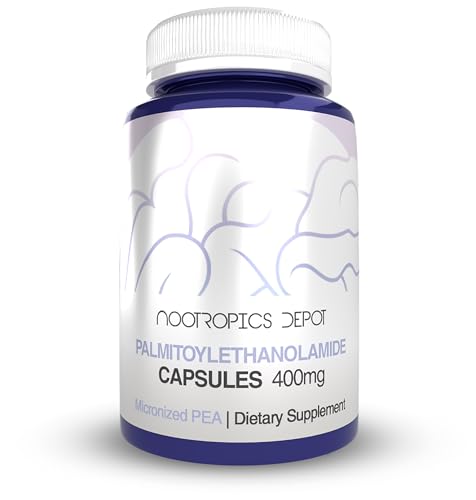
capsules, 300 mg PEA (as Levagen+) per serving: Levagen+ with LipiSperse, a branded PEA ingredient marketed for solubility and absorption - Nootropics Depot Palmitoylethanolamide (PEA) Capsules
capsules, 400 mg micronized PEA per capsule: two or three capsules reach the 600 to 1,200 mg daily range used in trials - Liftmode Palmitoylethanolamide (PEA) Powder
powder, 400 mg per measured scoop: Powder form allows flexible dosing and is significantly cheaper per gram for long-term daily users
As an Amazon Associate we earn from qualifying purchases. PEA quality depends on particle size more than price. Most clinical research used micronized or ultramicronized material, so prefer a product that states its particle size grade or names a branded ingredient such as Levagen+, and check the daily serving reaches the 600 to 1,200 mg used in trials. A label reading only palmitoylethanolamide, with no particle size disclosure, may be standard crystalline powder, but no published human data show how much any PEA form is absorbed.
A Note on the Evidence
PEA is a dietary supplement and is not FDA-approved to diagnose, treat, cure, or prevent any disease; the meta-analytic evidence, while encouraging, is based on trials that are often small and heterogeneous, and conclusions should not be extrapolated to all formulations or all pain conditions. Individuals taking immunosuppressants, anticoagulants, or chemotherapy agents should consult a physician before adding PEA, and anyone managing a serious pain condition should do so under medical supervision rather than self-treating.
Frequently Asked Questions
What types of chronic pain have been studied in PEA meta-analyses?
Reviewed conditions include sciatica, low back pain, osteoarthritis, fibromyalgia, neuropathic pain, diabetic peripheral neuropathy, and endometriosis-related pelvic pain. The 2022 systematic review and meta-analysis organized findings by nociceptive, musculoskeletal, and neuropathic categories and found supportive evidence across all three [3]. Endometriosis-related pain has its own dedicated meta-analysis [4].
Does the form of PEA (micronized vs. standard) affect the evidence?
Yes. A 2024 systematic review and meta-analysis focused specifically on micron-size oral PEA and found maintained analgesic effects over extended treatment periods [6]. Most of the positive RCT evidence involves micronized or ultramicronized preparations, which are intended to improve absorption by reducing particle size, although no published human data confirm better absorption. When evaluating supplements, checking whether the product uses a characterized micronized form is reasonable.[11]
How does PEA compare to conventional pain medications in clinical trials?
Direct head-to-head comparisons with established analgesics are limited. Most trials compare PEA to placebo or add it on top of standard care. The meta-analyses consistently show benefits versus control, but the evidence base does not yet support ranking PEA against NSAIDs, anticonvulsants, or opioids with confidence [8][1].

Is PEA safe for long-term use?
Across reviewed trials, adverse event rates have been low and comparable to placebo, supporting a favorable short-to-medium-term tolerability profile [7][5]. However, most trials run for weeks to months rather than years, so robust long-term safety data are limited. This is a gap that authors of recent meta-analyses explicitly note as needing further research [8].
Is there specific evidence for PEA in diabetic neuropathy?
Yes. A 2026 systematic review and meta-analysis evaluated PEA specifically in patients with diabetic neuropathic pain and found it was associated with reduced pain scores, but it included only three studies in 188 patients with very high heterogeneity (I2 = 96%)[5]. This population is of particular interest because many standard neuropathic pain agents carry cardiovascular or renal risks relevant to people with diabetes.
What do the most recent meta-analyses add compared to earlier ones?
Earlier pooled analyses from 2016 to 2017 established a preliminary evidence base with limited trial numbers [2][9]. More recent work has increased the number of included trials, restricted analyses to higher-quality double-blind designs, examined extended treatment durations, and attempted to address heterogeneity in dosing and populations [1][8][6]. The overall direction of evidence is consistent, but the pooled trials remain few and heterogeneous, and the optimal dose is not established.[9][1]
References
- Lang-Illievich K et al. Palmitoylethanolamide in the Treatment of Chronic Pain: A Systematic Review and Meta-Analysis of Double-Blind Randomized Controlled Trials. Nutrients (2023). PMID 36986081
- Paladini A et al. Palmitoylethanolamide, a Special Food for Medical Purposes, in the Treatment of Chronic Pain: A Pooled Data Meta-analysis. Pain physician (2016). PMID 26815246
- Scuteri D et al. Effects of Palmitoylethanolamide (PEA) on Nociceptive, Musculoskeletal and Neuropathic Pain: Systematic Review and Meta-Analysis of Clinical Evidence. Pharmaceutics (2022). PMID 36015298
- Indraccolo U et al. Micronized palmitoylethanolamide/trans-polydatin treatment of endometriosis-related pain: a meta-analysis. Annali dell'Istituto superiore di sanita (2017). PMID 28617258
- Prado MB Jr et al. Efficacy, safety, and tolerability of palmitoylethanolamide in the management of diabetic neuropathic pain: a systematic review and meta-analysis. Journal of diabetes and metabolic disorders (2026). PMID 41664677
- Schweiger V et al. Extended Treatment with Micron-Size Oral Palmitoylethanolamide (PEA) in Chronic Pain: A Systematic Review and Meta-Analysis. Nutrients (2024). PMID 38892586
- Bortoletto R et al. Palmitoylethanolamide supplementation for human health: A state-of-the-art systematic review of Randomized Controlled Trials in patient populations. Brain, behavior, & immunity: health (2025). PMID 39839988
- Viña I et al. Meta-Analysis of Palmitoylethanolamide in Pain Management: Addressing Literature Gaps and Enhancing Understanding. Nutrition reviews (2025). PMID 39798151
- Artukoglu BB et al. Efficacy of Palmitoylethanolamide for Pain: A Meta-Analysis. Pain physician (2017). PMID 28727699
- Faig-Martí J et al. Measuring the placebo effect in carpal tunnel syndrome. Journal of orthopaedics and traumatology : official journal of the Italian Society of Orthopaedics and Traumatology (2020). PMID 31993783
- Rankin L et al. The Basal Pharmacology of Palmitoylethanolamide. International journal of molecular sciences (2020). PMID 33114698
- Faig-Martí J et al. Use of palmitoylethanolamide in carpal tunnel syndrome: a prospective randomized study. Journal of orthopaedics and traumatology : official journal of the Italian Society of Orthopaedics and Traumatology (2017). PMID 28299455
- Mellar P. Davis et al. Treatment of Established Chemotherapy-Induced Neuropathy with N-Palmitoylethanolamide: A Randomized, Double-Blind Phase II Pilot Study. Cancers (2024). PMID 39766143
These statements have not been evaluated by the Food and Drug Administration. This information is not intended to diagnose, treat, cure, or prevent any disease. Content is for informational purposes only and is not medical advice; consult a qualified healthcare provider before starting any supplement. As an Amazon Associate we earn from qualifying purchases.