Palmitoylethanolamide, commonly abbreviated PEA, is a fatty acid amide your body already produces in response to cellular stress and inflammation. Unlike many trendy supplements, PEA has a substantial research record stretching back decades, with studies examining its role in chronic pain, neuropathic discomfort, and inflammatory conditions. It works primarily by activating PPAR-α nuclear receptors and stabilizing mast cells, dampening neuroinflammatory signaling through pathways that do not involve opioid receptors.
Despite that track record, the supplement aisle can be confusing. PEA comes in several particle-size formulations, is sold under a range of brand names, and varies considerably in manufacturing quality. This guide explains the meaningful differences between forms, what to prioritize when reading a label, and the honest caveats you should keep in mind before purchasing. PEA’s clinical record rests on randomized trials pooled in meta-analyses of pain outcomes[1][2], not on comparative testing of retail brands. No trial has pitted one PEA product against another, so the comparisons below turn on formulation and labelling rather than on head-to-head results. Informational only, not medical advice.
Key Takeaways
- Ultramicronized and micronized PEA are the forms used in most clinical research, but no head-to-head trial compares them with standard PEA and no published human data describe PEA’s oral bioavailability [3][4]: look for explicit formulation labeling or a recognized trademarked ingredient like Levagen+ or PeaPure.
- Doses used in research typically fall between 300 mg and 1,200 mg daily, divided into two or three servings, and the optimal dose has not been established [1][5][6]; many consumer products are underdosed.
- Third-party testing seals (NSF, USP, Informed Sport) are the most reliable independent quality signals on a PEA supplement label.
- PEA works through PPAR-α activation and mast cell stabilization, not through opioid receptors, making it mechanistically distinct from conventional pain medications.
- Expect a four-to-eight-week window before evaluating results; PEA modulates inflammatory signaling over time rather than producing acute relief.
How PEA Works: Mechanism in Plain Language
PEA belongs to the N-acylethanolamine family, a group of lipid signaling molecules. When tissues are injured or stressed, cells synthesize PEA on demand and release it locally. Its primary documented mechanism is activation of peroxisome proliferator-activated receptor-alpha (PPAR-α), a nuclear receptor that regulates genes involved in inflammation and lipid metabolism. Activating PPAR-α turns down the production of pro-inflammatory cytokines and mediators, reducing the cascade that generates pain and swelling.
A second key mechanism is mast cell stabilization. Mast cells are immune sentinels that release histamine, proteases, and other inflammatory molecules when activated. PEA appears to reduce their degranulation, which is particularly relevant for conditions where mast cell overactivity contributes to symptoms, including certain pain syndromes and hypersensitivity reactions. Importantly, PEA does not bind to opioid receptors, making it a mechanistically distinct option for people concerned about dependency or tolerance.
PEA also interacts with TRPV1 channels and GPR55 receptors indirectly, through what researchers describe as an ‘entourage’ effect alongside endocannabinoids, though it does not bind CB1 or CB2 receptors itself. This profile makes PEA of interest for neuropathic pain, but it is not a replacement for prescribed therapies and is not FDA-approved to treat any condition.
PEA Formulation Types: Why Particle Size Matters
Standard-grade PEA is a crystalline powder with poor water solubility. PEA is poorly soluble in water, but a pharmacology review found no published information on its oral bioavailability or how it varies between people [4]. Most early PEA research used standard formulations, and clinical results were sometimes inconsistent: although no human data show that absorption explains the differences [4].
Research note: A pharmacology review of PEA concluded that for treatment up to 49 days the data argue against serious adverse reactions at an incidence of 1 in 200 or greater, but longer-term safety data are too thin to rule out rarer events [3].
Micronized PEA (m-PEA) is made by reducing particle size; a review reports 2 to 6 micrometres for micronized PEA and 0.8 to 2 micrometres for ultramicronized PEA, but no head-to-head trial shows better absorption [7][3]. Ultramicronized formulations, such as those sold under brand names like PeaPure and Levagen+, have been commonly used in recent clinical trials, but no head-to-head trial compares them with unmicronized PEA and no published human data describe oral bioavailability [3][4].
A co-ultramicronized combination of PEA with the flavonoid luteolin (co-ultraPEALut) has also appeared in neurological research. Luteolin has its own anti-inflammatory and antioxidant properties, and the combination is thought to offer additive effects on neuroinflammation. However, combinations make it harder to attribute outcomes to PEA alone, and the added cost may not be justified for everyone.
What to Look For on a PEA Supplement Label
First, identify the formulation type explicitly. Labels that specify ‘micronized’ or ‘ultramicronized’, or reference a trademarked form such as Levagen+ (Gencor) or PeaPure, are indicating a particle-size-reduced product. Generic labels that say only ‘palmitoylethanolamide powder’ without any further specification are likely standard-grade, though no human data show how its absorption differs [4]. If bioavailability-optimized delivery matters to you, the form should be named clearly.
One licensed PEA label lists 400 mg per capsule and 3 capsules once daily
400 mg of PEA
The Health Canada licence lists N-(2-hydroxyethyl)hexadecanamide, the chemical name for PEA, at 400.0 mg per capsule.
3 capsules, once daily
For adults 19 and over, the same licence recommends 3.0 capsules, 1 time daily.
1200 mg/day generally
A review says PEA products are licensed as nutraceuticals, food supplements or foods for medical purposes in different countries, with a generally recommended dose of 1200 mg/day.
300 to 1200 mg per day
In a pooled analysis, 1,188 patients took micronized or ultramicronized PEA for 21 to 60 days at 300 to 1200 mg per day.
Check the milligrams per capsule and the number of capsules, then compare the daily total with the doses that have been studied.
The label cards describe one Health Canada licensed product, not every PEA supplement. Source: Health Canada 2026; Clayton et al., International journal of molecular sciences 2021; Varrassi, Pain Physician 2016.
Chart: peasupplementhub.com: One licensed PEA label lists 400 mg per capsule and 3 capsules once daily
Embed this chart
Free to reuse on your site. Copy the code below; please keep the credit link.
Second, check the dose per serving against what has been used in published research. Most clinical work has used between 300 mg and 1,200 mg of PEA daily, often split into two doses. Products supplying under 200 mg per capsule without a corresponding recommendation to take multiple capsules may be underdosing relative to studied amounts. Third-party testing seals (from NSF, USP, or Informed Sport) are meaningful quality signals, indicating the product has been verified for label accuracy and absence of contaminants or banned substances.
Avoid products that make disease claims on the label (e.g., ‘treats fibromyalgia’ or ‘cures nerve pain’). Such claims are not legally permissible for dietary supplements in the United States and suggest the brand is not operating carefully within regulatory boundaries. Also check the ‘other ingredients’ list for unnecessary fillers, allergens, or proprietary blends that obscure individual ingredient amounts.
Notable PEA Brands and Products
Levagen+ by Gencor is one of the most widely used branded PEA ingredients and has been licensed to numerous supplement companies. It uses a patented LipiSperse dispersion technology rather than simple micronization, aiming to improve dispersibility in water. Several randomized trials have used Levagen+ specifically, and several of them were funded or supplied by Gencor, its maker [8][9][10][11][12]. Brands using this ingredient will typically display the Levagen+ logo.
PeaPure is a Dutch ultramicronized PEA product developed by JP Russell Science and sold directly as a standalone supplement. It has a relatively long clinical history in the Netherlands and is available internationally. Doses commonly used are 400 mg three times daily. Because it is sold as a single-ingredient product without proprietary blends, it is straightforward to assess.
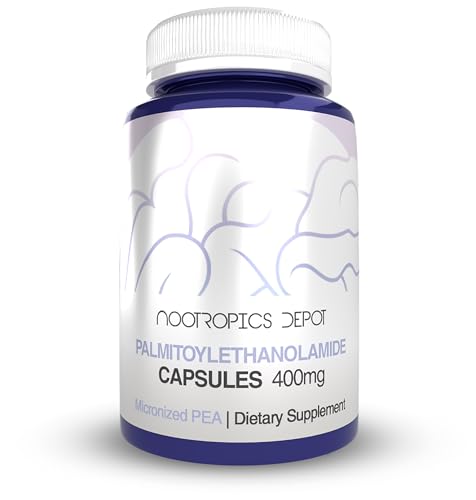
In the broader U.S. market, companies such as Double Wood Supplements, Life Extension, and Nootropics Depot offer PEA products, with varying formulation specifications. When comparing these, apply the same criteria: formulation type, dose per serving, third-party testing, and ingredient transparency. House-brand generic offerings at very low price points often use standard (non-micronized) PEA, which may reduce efficacy relative to ultramicronized alternatives.

Dosing, Timing, and Realistic Expectations
Research protocols have varied, but a commonly referenced starting range for ultramicronized PEA is 600 mg to 1,200 mg daily, divided into two or three doses. Some protocols begin at higher doses for the first few weeks before reducing to a maintenance level. Taking PEA with a meal that contains some dietary fat may improve absorption, given its lipid-based chemistry, though this has not been rigorously studied for all formulations.
PEA is generally not a fast-acting compound. Unlike NSAIDs or antihistamines, it appears to work by modulating underlying inflammatory signaling rather than blocking a single acute pathway. Users in clinical trials have often reported meaningful changes after four to eight weeks of consistent use. Setting expectations accordingly is important, if you are seeking immediate relief, PEA is probably not the right primary tool.
There is currently no established upper tolerable limit for PEA set by a regulatory authority, and adverse events in clinical trials have been infrequent and mild. Gastrointestinal discomfort is the most commonly reported issue. PEA is not recommended as a substitute for prescribed medication, and anyone managing a serious medical condition should discuss supplementation with a qualified clinician before starting.
PEA for Specific Chronic Pain Conditions: What the Evidence Says
PEA has been investigated across a spectrum of chronic pain conditions. While the body of evidence continues to grow, it is important to review the findings with a critical and empathetic lens, acknowledging both promising results and areas where more robust research is needed.Fibromyalgia and Chronic Widespread Pain
Fibromyalgia is characterized by widespread musculoskeletal pain accompanied by fatigue, sleep, memory, and mood issues. Several studies have explored PEA’s potential in fibromyalgia. Fibromyalgia data come mainly from retrospective and open-label add-on studies, some of which combined PEA with acetyl-L-carnitine, so results cannot be credited to PEA alone [14][15][16]. For example, in a retrospective study of 359 analysed fibromyalgia patients on add-on ultramicronized PEA, VAS pain fell from 75.84 to 52.49, but 151 patients left treatment because it was not working and there was no placebo group [14]. The mechanism is thought to involve its anti-inflammatory actions and its ability to modulate glial cell activity, which is implicated in central sensitization in fibromyalgia. However, not all studies show strong effects, and PEA is generally considered an adjunct therapy rather than a standalone cure.Endometriosis Pain and Pelvic Pain
Endometriosis, a condition where tissue similar to the lining of the uterus grows outside the uterus, causes chronic pelvic pain, dysmenorrhea, and dyspareunia. PEA’s anti-inflammatory and pain-modulating properties make it a relevant area of study for this condition. Endometriosis studies mostly used a PEA plus polydatin combination, often without a control group. In the one placebo-controlled trial, in 61 women, the combination reduced pelvic pain more than placebo, but pain also fell in the placebo group and celecoxib reduced pelvic pain more than the combination [17][18]. Its ability to calm mast cell activation, which is often heightened in endometriotic lesions, is a key proposed mechanism. While promising, larger, long-term studies are still needed to solidify PEA’s role as a primary treatment for endometriosis pain.Neuropathic Pain Conditions
Neuropathic pain, arising from damage to the somatosensory nervous system, can be particularly challenging to treat. Conditions like sciatica, diabetic neuropathy, and carpal tunnel syndrome often involve neuroinflammation and nerve hypersensitivity. PEA has shown considerable promise in managing various forms of neuropathic pain. A 2025 meta-analysis of randomized trials found PEA effective for neuropathic pain (SMD -0.97), but results are not uniform. A placebo-controlled trial in 61 people with carpal tunnel syndrome found PEA 600 mg/day did not improve clinical or electrophysiological measures, and an 88-patient pilot found PEA failed to improve established chemotherapy-induced neuropathy [19][20][21]. Evidence that PEA protects nerves depends largely on animal work, such as mice lacking the PPAR-alpha receptor [22]. The pooled evidence for neuropathic pain is among the more favourable for PEA, but diabetic neuropathy data are thin: a 2026 review found only three studies with 188 patients and very high heterogeneity (I2 = 96%) [23].Who Might Consider PEA and Who Should Be Cautious
The populations most studied in PEA research include adults with chronic low back pain, neuropathic pain conditions, fibromyalgia, and osteoarthritis. Athletes dealing with exercise-induced inflammation or soft-tissue injuries have also been an area of growing interest, partly driving the proliferation of sports-nutrition products featuring Levagen+. PEA’s non-sedating, non-opioid profile makes it appealing to individuals seeking to avoid the side effects associated with conventional analgesics.
Certain groups should consult a physician before using PEA. People taking immunosuppressant medications, anticoagulants, or chemotherapy agents face theoretical interaction risks that have not been fully characterized in human studies. Pregnant and breastfeeding individuals should avoid PEA supplementation due to insufficient safety data in these populations. PEA is not intended for use in children without medical supervision.
🛒 Where to Buy Palmitoylethanolamide (PEA)
- Wellness Resources PEA Ultra with Levagen+
capsules, 300 mg PEA (as Levagen+) per serving: Levagen+ with LipiSperse, a branded PEA ingredient marketed for solubility and absorption - Nootropics Depot Palmitoylethanolamide (PEA) Capsules
capsules, 400 mg micronized PEA per capsule: two or three capsules reach the 600 to 1,200 mg daily range used in trials - Liftmode Palmitoylethanolamide (PEA) Powder
powder, 400 mg per measured scoop: Powder form allows flexible dosing and is significantly cheaper per gram for long-term daily users
As an Amazon Associate we earn from qualifying purchases. PEA quality depends on particle size more than price. Most clinical research used micronized or ultramicronized material, so prefer a product that states its particle size grade or names a branded ingredient such as Levagen+, and check the daily serving reaches the 600 to 1,200 mg used in trials. A label reading only palmitoylethanolamide, with no particle size disclosure, may be standard crystalline powder, but no published human data show how much any PEA form is absorbed [4].
A Note on the Evidence
The research base for PEA, while more substantial than for many supplements, still consists predominantly of small or short-duration trials; larger independent replication is ongoing. PEA is not a substitute for medical care, and individuals managing chronic pain, autoimmune conditions, or serious illness (or those taking prescription medications including immunosuppressants, anticoagulants, or chemotherapy) should consult a qualified healthcare provider before use.
Pooled analyses of PEA for pain favour PEA over controls, but they combine few and varied trials of often poor quality, and one found that neither dose nor treatment duration changed the measured benefit [1].
Frequently Asked Questions
What is the difference between micronized and ultramicronized PEA?
Both terms refer to particle-size reduction relative to standard PEA powder, with ultramicronized producing smaller particles (often below 2 micrometers) than micronized (typically 2 to 10 micrometers). Smaller particles have a greater surface area, but no head-to-head trial compares micronized with unmicronized PEA and no published human data show how well any form is absorbed [3][4]. Most recent clinical research uses ultramicronized formulations, so if you want your supplement to match studied forms, ultramicronized is the preferred option.
Can I take PEA with other supplements or medications?
PEA is generally considered well-tolerated in healthy adults and is often combined with other anti-inflammatory compounds such as luteolin. However, its interactions with prescription medications (particularly immunosuppressants, anticoagulants, and chemotherapy drugs) have not been thoroughly studied in humans. If you take any prescription medication, consult a pharmacist or physician before adding PEA to your regimen.
How long does it take for PEA to work?
PEA is not designed to produce rapid symptom relief the way an NSAID or antihistamine might. Clinical trial participants have generally reported meaningful changes after four to eight weeks of daily use. Consistency matters more than timing relative to meals, though taking PEA with a small amount of dietary fat may theoretically support absorption given its lipid-soluble nature.
Is PEA safe for long-term use?
PEA is an endogenous molecule the body naturally produces, and pooled analyses report few adverse events at the doses studied, but most human studies were short and designed to test efficacy rather than safety [6][13]. Mild gastrointestinal symptoms are the most frequently reported adverse event. Long-term safety data beyond one year is limited, and PEA is not appropriate as a long-term substitute for physician-supervised treatment of a diagnosed condition.
Does PEA have psychoactive effects or addiction potential?
No. PEA does not bind opioid receptors, dopamine receptors, or cannabinoid CB1/CB2 receptors in the way substances associated with euphoria or dependency do. It does not produce sedation, cognitive impairment, or altered mood in reported trials. No abuse potential, tolerance or withdrawal syndrome has been reported, but most human studies were short and designed to test efficacy rather than safety [13].
Is PEA FDA-approved?
No. PEA is sold in the United States as a dietary supplement and is not FDA-approved to diagnose, treat, cure, or prevent any disease. Supplement manufacturers are legally required to avoid disease claims on labels. PEA has regulatory drug status in some European countries for specific indications, but that approval does not extend to the U.S. dietary supplement market.
References
- Artukoglu BB et al. Efficacy of Palmitoylethanolamide for Pain: A Meta-Analysis. Pain physician (2017). PMID 28727699
- Schweiger V et al. Extended Treatment with Micron-Size Oral Palmitoylethanolamide (PEA) in Chronic Pain: A Systematic Review and Meta-Analysis. Nutrients (2024). PMID 38892586
- Linda Rankin et al. Palmitoylethanolamide for the treatment of pain: pharmacokinetics, safety and efficacy. British Journal of Clinical Pharmacology (2016). PMID 27220803
- Rankin L et al. The Basal Pharmacology of Palmitoylethanolamide. International journal of molecular sciences (2020). PMID 33114698
- Lang-Illievich K et al. Palmitoylethanolamide in the Treatment of Chronic Pain: A Systematic Review and Meta-Analysis of Double-Blind Randomized Controlled Trials. Nutrients (2023). PMID 36986081
- Giustino Varrassi Palmitoylethanolamide, a Special Food for Medical Purposes, in the Treatment of Chronic Pain: A Pooled Data Meta-analysis. Pain Physician (2016). PMID 26815246
- Roncati L et al. Micronized / ultramicronized palmitoylethanolamide (PEA) as natural neuroprotector against COVID-19 inflammation. Prostaglandins & other lipid mediators (2021). PMID 33636368
- Briskey D et al. The Effect of Levagen+ (Palmitoylethanolamide) Supplementation on Symptoms of Allergic Rhinitis-A Double-Blind Placebo-Controlled Trial. Nutrients (2023). PMID 38068797
- Mallard A et al. The Effect of Orally Dosed Levagen+™ (palmitoylethanolamide) on Exercise Recovery in Healthy Males-A Double-Blind, Randomized, Placebo-Controlled Study. Nutrients (2020). PMID 32106527
- Briskey D et al. Effectiveness of Palmitoylethanolamide (Levagen+) Compared to a Placebo for Reducing Pain, Duration, and Medication Use during Migraines in Otherwise Healthy Participants-A Double-Blind Randomised Controlled Study. Pharmaceuticals (Basel, Switzerland) (2024). PMID 38399360
- Rao A et al. Efficacy of Topical Palmitoylethanolamide (Levagen+) for the Management of Eczema Symptoms: A Double-Blind, Comparator-Controlled, Randomized Clinical Trial. Skin pharmacology and physiology (2023). PMID 38408443
- Emily Pickering et al. A randomized controlled trial assessing the safety and efficacy of palmitoylethanolamide for treating diabetic-related peripheral neuropathic pain. Inflammopharmacology (2022). PMID 36057884
- Earle R. Nestmann Safety of micronized palmitoylethanolamide (microPEA): lack of toxicity and genotoxic potential. Food Science & Nutrition (2016). PMID 28265364
- Schweiger V et al. Ultramicronized Palmitoylethanolamide (um-PEA) as Add-on Treatment in Fibromyalgia Syndrome (FMS): Retrospective Observational Study on 407 Patients. CNS & neurological disorders drug targets (2019). PMID 30827269
- Salaffi F et al. Trajectory of Change in the Severity of Symptoms in Patients with Fibromyalgia over 24 Months: Exploratory Analyses of a Combination Pharmacological Intervention. Journal of personalized medicine (2024). PMID 39063943
- Bentivenga C et al. Retrospective Evaluation of L-Acetyl Carnitine and Palmitoylethanolamide as Add-On Therapy in Patients with Fibromyalgia and Small Fiber Neuropathy. Pharmaceutics (2025). PMID 40871024
- Giugliano E et al. The adjuvant use of N-palmitoylethanolamine and transpolydatin in the treatment of endometriotic pain. European journal of obstetrics, gynecology, and reproductive biology (2013). PMID 23415738
- Cobellis L et al. Effectiveness of the association micronized N-Palmitoylethanolamine (PEA)-transpolydatin in the treatment of chronic pelvic pain related to endometriosis after laparoscopic assessment: a pilot study. European journal of obstetrics, gynecology, and reproductive biology (2011). PMID 21601979
- Viña I et al. Meta-Analysis of Palmitoylethanolamide in Pain Management: Addressing Literature Gaps and Enhancing Understanding. Nutrition reviews (2025). PMID 39798151
- Faig-Martí J et al. Use of palmitoylethanolamide in carpal tunnel syndrome: a prospective randomized study. Journal of orthopaedics and traumatology : official journal of the Italian Society of Orthopaedics and Traumatology (2017). PMID 28299455
- Mellar P. Davis et al. Treatment of Established Chemotherapy-Induced Neuropathy with N-Palmitoylethanolamide: A Randomized, Double-Blind Phase II Pilot Study. Cancers (2024). PMID 39766143
- Lorenzo Di Cesare Mannelli et al. Palmitoylethanolamide Is a Disease-Modifying Agent in Peripheral Neuropathy: Pain Relief and Neuroprotection Share a PPAR-Alpha-Mediated Mechanism. Mediators of Inflammation (2013). PMID 23533304
- Prado MB et al. Efficacy, safety, and tolerability of palmitoylethanolamide in the management of diabetic neuropathic pain: a systematic review and meta-analysis. Journal of diabetes and metabolic disorders (2026). PMID 41664677
These statements have not been evaluated by the Food and Drug Administration. This information is not intended to diagnose, treat, cure, or prevent any disease. Content is for informational purposes only and is not medical advice; consult a qualified healthcare provider before starting any supplement. As an Amazon Associate we earn from qualifying purchases.