Endometriosis affects roughly 10% of people with a uterus and is characterized by chronic pelvic pain, inflammation, and lesion-driven nerve sensitization. Conventional management (hormonal therapy, NSAIDs, or surgery) works for many but leaves others searching for complementary options that carry fewer systemic side effects. Palmitoylethanolamide (PEA), an endogenous fatty acid amide the body naturally produces, has attracted research interest in this context because of how it interacts with pain and inflammatory pathways without engaging opioid receptors.
PEA is not a drug, and no PEA product is FDA-approved to treat endometriosis or any other condition. What follows is an informational overview of the proposed mechanisms, the formulation factors that affect how well PEA is absorbed, and the practical considerations worth weighing if you are thinking about adding a PEA supplement to a pain-management plan. Always discuss any new supplement with the clinician managing your endometriosis care.
Key Takeaways
- PEA works through PPAR-α activation and mast cell stabilization: mechanisms relevant to the neuroinflammatory environment of endometriosis, though direct endometriosis-specific clinical evidence is still limited.
- Formulation is critical: most trials used ultra-micronized or co-micronized products, but no head-to-head trial or human absorption data show they are absorbed better than standard powder; look for explicit labeling of the particle size process [4][5].
- Third-party testing (NSF, USP, Informed Sport) is the most reliable quality signal when choosing between brands.
- PEA is not a fast-acting analgesic; if trying it, commit to a consistent trial of at least 8 to 12 weeks while tracking symptoms systematically.
- PEA should complement, not replace, medical management of endometriosis: always loop in the clinician overseeing your care before starting.
How PEA May Influence Endometriosis-Related Pain
PEA’s primary proposed mechanism is activation of the PPAR-α (peroxisome proliferator-activated receptor alpha) nuclear receptor. When this receptor is activated, it down-regulates the transcription of pro-inflammatory genes, which in turn reduces the release of cytokines, prostaglandins, and other signaling molecules that contribute to the neuroinflammatory environment characteristic of endometriosis.
A second mechanism involves mast cell stabilization. Mast cells accumulate in endometriotic lesions and contribute to local pain signaling by releasing histamine, nerve growth factor, and other mediators. PEA appears to reduce mast cell degranulation, which may help quiet peripheral pain amplification at lesion sites.
Endometriosis also involves peripheral and central sensitization: the nervous system becomes progressively more reactive to pain inputs over time. Because PEA modulates neuroinflammatory signaling in peripheral nerve tissue without acting on opioid receptors, researchers have investigated whether it might blunt this sensitization process. These mechanisms remain proposed rather than definitively established in endometriosis specifically: the clinical work published so far has measured pain scores rather than the sensitization pathway itself, and a meta-analysis of micronized PEA with trans-polydatin in endometriosis-related pain drew on only four studies its authors rated as poor quality[1].
The one placebo-controlled trial in endometriosis, in 61 women after laparoscopic surgery, tested a PEA plus transpolydatin combination rather than PEA alone. The combination reduced pelvic pain more than placebo, but pain fell in every group including placebo, and celecoxib reduced pelvic pain more than the combination [11].
Why Formulation Matters More Than Milligrams
Raw PEA is a lipophilic compound with poor water solubility, although no published human data describe PEA’s oral bioavailability [5]. Two micronization approaches have been developed to address this: ultra-micronized PEA (um-PEA), which reduces particle size to increase surface area and absorption speed, and co-micronized PEA, which pairs PEA with a co-agent such as polydatin to potentially extend its anti-inflammatory effect.
Research note: In a small open-label pilot in women with endometriosis who wanted to conceive, ultramicronized PEA followed by a PEA/polydatin product showed no serious side effects. Pregnant women were excluded, so this does not show safety in pregnancy [3].
When comparing products, look for explicit labeling of the particle size or formulation type. Terms like ‘ultra-micronized,’ ‘micronized,’ or ‘co-micronized’ on the label indicate that the manufacturer has processed the raw material to improve bioavailability. Generic ‘PEA powder’ with no further specification may be absorbed differently, but no head-to-head trial compares forms [4][5]. Third-party testing for identity and purity is a separate but equally important quality marker.
Dose in clinical research has generally ranged from 300 mg to 1200 mg per day taken in divided doses, with um-PEA studies often using 600 mg twice daily. Those figures reflect the ranges used in published protocols: 300 mg in a randomized, double-blind, placebo-controlled crossover trial of acute menstrual pain[2], and twice-daily co-micronized dosing across an open-label endometriosis series[3]. They are for general orientation only; do not self-dose based on this article alone.
What to Prioritize When Choosing a PEA Product
Formulation type comes first. Prioritize um-PEA or co-micronized PEA over standard powder. Check whether the product specifies particle size reduction or references the micronization process in its product documentation, not just in marketing language.
Independent certification matters. Look for a certificate of analysis (COA) from a third-party laboratory confirming that the product contains what the label claims and is free of heavy metals, pesticide residues, and microbial contamination. Certifications from NSF International, USP, or Informed Sport are meaningful signals because these programs audit manufacturing facilities in addition to testing finished products.
Excipients and fillers deserve a look too. Some people with endometriosis also have gastrointestinal sensitivity or mast cell activation disorder. Checking the inactive ingredients list for common irritants (artificial dyes, soy-derived fillers, or high-dose magnesium stearate) is a reasonable precaution. Capsule format is generally easier to tolerate than tablet binders for those with GI sensitivities.
PEA Compared to Other Supplements Sometimes Used for Endometriosis
Several supplements are discussed alongside PEA in the endometriosis community, including N-acetylcysteine (NAC), curcumin, resveratrol, and omega-3 fatty acids. These work through overlapping but distinct mechanisms: antioxidant activity, NF-κB pathway inhibition, or eicosanoid modulation. PEA’s main recognized target is the PPAR-alpha receptor, and its mast cell effects are mostly shown in animal and cell studies [6][7][8].
It is worth noting that combining supplements without professional guidance can introduce unknown interactions. This is particularly true for anyone using hormonal therapies for endometriosis, as some botanical supplements alter estrogen metabolism. PEA does not appear to have known hormonal interactions, but this is not a reason to bypass a conversation with your prescribing clinician.

Realistic Expectations and Timelines
Clinical research in adjacent pain conditions has generally used supplementation periods of four to twelve weeks before evaluating outcomes. Pain modulation from a mechanism like PPAR-α activation is not acute in the way an analgesic is: there is no expected rapid onset. People trying PEA for endometriosis-related pain should approach it as a potential gradual adjunct, not a substitute for established medical care.
Placebo groups improve a lot in pelvic pain trials, so the gap to treatment is what matters
More than half of the placebo group improved, and in endometriosis the combination did not beat celecoxib.
Both trials tested a PEA plus transpolydatin combination, not PEA alone. Bars show the dysmenorrhea trial only. Source: Tartaglia et al., Journal of pediatric and adolescent gynecology 2015; Cobellis et al., European journal of obstetrics, gynecology, and reproductive biology 2011.
Data table
| Item | Value |
|---|---|
| PEA plus transpolydatin | 98.18% with pelvic pain improvement |
| Placebo | 56.36% with pelvic pain improvement |
Embed this chart
Free to reuse on your site. Copy the code below; please keep the credit link.
Individual response will vary. Endometriosis is a heterogeneous condition: some people have predominantly peritoneal disease, others ovarian endometriomas, and others deep infiltrating lesions with different degrees of nerve involvement. Whether a compound targeting neuroinflammation will be relevant in any individual case depends on factors that cannot be predicted from a label.
Tracking symptoms systematically, using a pain diary or an app designed for endometriosis, before and after starting a supplement gives you and your care team meaningful data rather than relying on general impressions. This discipline matters because placebo response in chronic pain conditions is real and well-documented.
Safety, Tolerability, and Who Should Be Careful
PEA has a favorable tolerability profile in clinical trials, with reported adverse events generally mild and no serious safety signals in studies conducted to date, although most human studies were short and designed to test efficacy rather than safety [9][10]. It is not a stimulant and is not associated with dependency. However, ‘well-tolerated in trials’ is not the same as ‘safe for everyone in all contexts.’
Individuals on immunosuppressant medications, anticoagulants, or chemotherapy agents should consult a physician before using PEA because the interaction data in these populations is limited. Pregnant and breastfeeding individuals should also seek medical guidance first, as human safety data in these groups is not available. PEA is a dietary supplement in most markets, not a regulated medicine, which means manufacturing quality and labeling accuracy are buyer-beware considerations unless a company has voluntarily sought third-party certification.
🛒 Where to Buy Palmitoylethanolamide (PEA)
- Wellness Resources PEA Ultra with Levagen+
capsules, 300 mg PEA (as Levagen+) per serving: Levagen+ with LipiSperse, a branded PEA ingredient marketed for solubility and absorption - Nootropics Depot Palmitoylethanolamide (PEA) Capsules
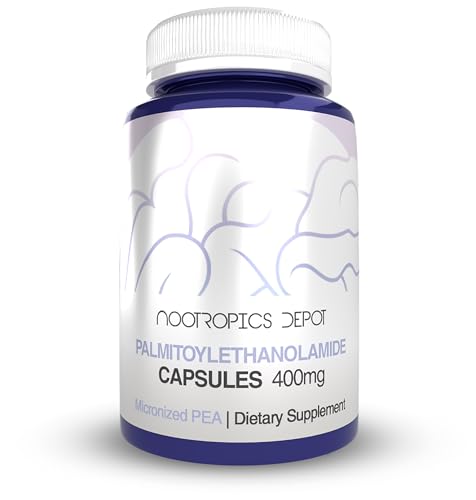
capsules, 400 mg micronized PEA per capsule: two or three capsules reach the 600 to 1,200 mg daily range used in trials - Liftmode Palmitoylethanolamide (PEA) Powder
powder, 400 mg per measured scoop: Powder form allows flexible dosing and is significantly cheaper per gram for long-term daily users
As an Amazon Associate we earn from qualifying purchases. PEA quality depends on particle size more than price. Most clinical research used micronized or ultramicronized material, so prefer a product that states its particle size grade or names a branded ingredient such as Levagen+, and check the daily serving reaches the 600 to 1,200 mg used in trials. A label reading only palmitoylethanolamide, with no particle size disclosure, may be standard crystalline powder, but no published human data show how much any PEA form is absorbed.
A Note on the Evidence
The evidence base for PEA specifically in endometriosis is still early-stage and limited; the proposed mechanisms are plausible but not definitively proven in this condition. PEA is a dietary supplement, not a medical treatment, and should not replace conventional endometriosis care. Anyone on immunosuppressants, anticoagulants, chemotherapy, or hormonal therapies should consult a physician before use.
Frequently Asked Questions
Is PEA approved to treat endometriosis?
No. PEA is sold as a dietary supplement and is not FDA-approved to diagnose, treat, cure, or prevent endometriosis or any other disease. It is being studied as a potential complementary option for pain modulation, but it does not have regulatory approval as a medical treatment.
What dose of PEA is typically used in research?
Clinical studies in pain conditions have generally used 300 mg to 1200 mg per day, often split into two doses. Ultra-micronized formulations tend to use 600 mg twice daily in published protocols. Those ranges come from published protocols in pelvic and menstrual pain rather than from any dose-finding trial conducted in endometriosis itself[3][2], so consult your clinician before selecting a dose rather than relying on this general range.
How long does PEA take to have an effect on pain?
Research in adjacent chronic pain conditions has typically run four to twelve weeks before outcomes were assessed. PEA is not expected to produce acute analgesia in the way a pain medication would. A systematic symptom-tracking approach over this timeframe gives the best signal of whether a response is occurring.
Can I take PEA alongside hormonal therapies for endometriosis?
PEA does not appear to have known hormonal interactions, but the interaction data between PEA and specific hormonal therapies is not well characterized in published research. Inform the clinician managing your hormonal treatment before adding PEA, as they can weigh your individual situation.
What is the difference between ultra-micronized PEA and co-micronized PEA?
Ultra-micronized PEA (um-PEA) has been processed to dramatically reduce particle size, increasing surface area and rate of dissolution. Co-micronized PEA is micronized in combination with another compound, commonly polydatin, which may extend anti-inflammatory activity. Both are described as higher-absorption options, but no published human data show how well any PEA form is absorbed, and both appear in the clinical literature [4][5], though direct head-to-head comparison data in endometriosis is not yet available.
Are there any people who should avoid PEA?
Individuals on immunosuppressants, anticoagulants, or chemotherapy should consult a physician before use, as interaction data in these groups is limited. Pregnant and breastfeeding individuals should also seek medical guidance first. PEA is generally well-tolerated in clinical trials, but supplement quality varies considerably, making third-party certified products the safer choice.
References
- Indraccolo U et al. Micronized palmitoylethanolamide/trans-polydatin treatment of endometriosis-related pain: a meta-analysis. Annali dell'Istituto superiore di sanita (2017). PMID 28617258
- Rao A et al. Palmitoylethanolamide (Levagen+) for acute menstrual pain: a randomized, crossover, double-blind, placebo-controlled trial. Women & health (2025). PMID 39910730
- Stochino Loi E et al. Effect of ultramicronized-palmitoylethanolamide and co-micronized palmitoylethanolamide/polydatin on chronic pelvic pain and quality of life in endometriosis patients. International journal of women's health (2019). PMID 31496832
- Linda Rankin et al. Palmitoylethanolamide for the treatment of pain: pharmacokinetics, safety and efficacy. British Journal of Clinical Pharmacology (2016). PMID 27220803
- Rankin L et al. The Basal Pharmacology of Palmitoylethanolamide. International journal of molecular sciences (2020). PMID 33114698
- LoVerme J et al. The search for the palmitoylethanolamide receptor. Life sciences (2005). PMID 15963531
- Lorenzo Di Cesare Mannelli et al. Palmitoylethanolamide Is a Disease-Modifying Agent in Peripheral Neuropathy: Pain Relief and Neuroprotection Share a PPAR-Alpha-Mediated Mechanism. Mediators of Inflammation (2013). PMID 23533304
- Francesca Borrelli et al. Palmitoylethanolamide, a naturally occurring lipid, is an orally effective intestinal anti‐inflammatory agent. British Journal of Pharmacology (2014). PMID 25205418
- Earle R. Nestmann Safety of micronized palmitoylethanolamide (microPEA): lack of toxicity and genotoxic potential. Food Science & Nutrition (2016). PMID 28265364
- Giustino Varrassi Palmitoylethanolamide, a Special Food for Medical Purposes, in the Treatment of Chronic Pain: A Pooled Data Meta-analysis. Pain Physician (2016). PMID 26815246
- Cobellis L et al. Effectiveness of the association micronized N-Palmitoylethanolamine (PEA)-transpolydatin in the treatment of chronic pelvic pain related to endometriosis after laparoscopic assessment: a pilot study. European journal of obstetrics, gynecology, and reproductive biology (2011). PMID 21601979
These statements have not been evaluated by the Food and Drug Administration. This information is not intended to diagnose, treat, cure, or prevent any disease. Content is for informational purposes only and is not medical advice; consult a qualified healthcare provider before starting any supplement. As an Amazon Associate we earn from qualifying purchases.