Chronic pain and neuroinflammation affect tens of millions of people, and many are actively looking beyond opioids and conventional anti-inflammatories for options that are both tolerable and sustainable. Two approaches that have attracted growing interest among researchers, clinicians, and patients are palmitoylethanolamide (PEA), a dietary supplement derived from a fatty acid the body produces naturally, and low-dose naltrexone (LDN), an off-label use of an FDA-approved opioid-antagonist drug. Despite operating through entirely different mechanisms, both are studied for overlapping concerns: pain modulation, inflammation, and conditions with a suspected neuroinflammatory component.
This article compares PEA and LDN honestly and directly. Neither is a cure, and neither is appropriate for every person or condition. What they share is a non-opioid mechanism, a relatively favorable tolerability profile compared to many conventional drugs, and a body of research that, while promising, remains smaller and younger than most people realize. Understanding how each works, what the evidence actually shows, and who should be cautious is the foundation for any informed conversation with a healthcare provider.
Key Takeaways
- PEA is a dietary supplement that works through PPAR-α activation and mast cell stabilization: it is endogenous, does not require a prescription, and few adverse events were reported in clinical trials, most of them short [7][8].
- LDN is a prescription-only off-label use of naltrexone that may work through transient opioid receptor rebound and TLR4 glial modulation; it is contraindicated alongside full opioid agonists.
- Both have been studied for chronic pain and neuroinflammatory conditions, but neither has large definitive randomized controlled trials: the evidence base for each is promising but preliminary.
- PEA is more accessible (no prescription, widely available), while LDN offers a different mechanistic angle and may be more relevant for autoimmune or central sensitization conditions with physician guidance.
- Neither is FDA-approved for the conditions most people explore them for; both are best approached as part of a broader care plan discussed with a healthcare provider.
How PEA Works: Endogenous Anti-Inflammatory Signaling
Palmitoylethanolamide is a fatty acid amide that the body produces on demand in response to tissue injury and cellular stress. It belongs to a family of lipid mediators that modulate local inflammation and pain signaling without acting on opioid receptors. Its primary proposed mechanism involves activation of PPAR-α (peroxisome proliferator-activated receptor alpha), a nuclear receptor that regulates gene expression related to inflammation, lipid metabolism, and neuroprotection. When PPAR-α is activated by PEA, downstream inflammatory signaling cascades are attenuated, meaning fewer pro-inflammatory cytokines and less sensitization of peripheral pain receptors [1].
A second key mechanism involves mast cell stabilization. Mast cells are immune cells found in connective tissue and at nerve endings; when activated, they release histamine, inflammatory cytokines, and other mediators that amplify pain and sensitization. In animal and lab work PEA appears to reduce mast cell degranulation, which may be particularly relevant in conditions where localized neuroinflammation drives symptoms. PEA does not act on opioid receptors, and trials have not reported the sedation, respiratory depression, or dependence associated with opioids, although most trials were short [8][7]. As a supplement, it is not FDA-approved to treat, cure, or prevent any disease, and the regulatory pathway means it faces different, and generally less stringent, evidence requirements than prescription drugs.
How Low-Dose Naltrexone Works: Transient Receptor Blockade and Glial Modulation
Naltrexone at standard doses (50 mg) is an FDA-approved opioid antagonist used in addiction medicine: it blocks opioid receptors and is prescribed for opioid use disorder and alcohol dependence. Low-dose naltrexone refers to doses typically in the 1.5 to 4.5 mg range, taken once daily, usually at bedtime [2]. At these much lower doses, the mechanism appears to be qualitatively different. Rather than sustained opioid receptor blockade, the brief overnight blockade is thought to provoke a rebound upregulation of the body’s own opioid receptors and endogenous opioid production: a phenomenon sometimes called the ‘opioid rebound hypothesis.’ This may result in analgesic and mood effects that outlast the drug’s short half-life.
Research note: Adding PEA after 3 months of duloxetine plus pregabalin gave further pain reduction in fibromyalgia versus the drug pair alone, but the comparison used a separate retrospective group and Epitech products [13].

A second proposed mechanism of LDN, and arguably the one that draws the most current scientific interest, involves antagonism of toll-like receptor 4 (TLR4) on glial cells, particularly microglia, the brain’s resident immune cells. Microglia activated through TLR4 release pro-inflammatory cytokines that contribute to central sensitization, chronic pain, depression, and several autoimmune and neurodegenerative conditions. By modulating glial activation through TLR4, LDN may dampen neuroinflammation through a route that is entirely independent of opioid receptor activity [3][2]. This dual-mechanism hypothesis, opioid rebound plus glial modulation, is central to why LDN is being explored in conditions as varied as fibromyalgia, multiple sclerosis, Crohn’s disease, and long COVID.
It is important to note that LDN is not FDA-approved for any of these uses. Prescribers who recommend it do so off-label, and because the drug is generic and therefore not commercially profitable to study at scale, large randomized controlled trials remain scarce. The existing evidence base consists primarily of small trials, case series, and patient-reported outcomes: genuinely promising but not conclusive.
Conditions Studied: Where Each Approach Has Evidence
PEA has been studied most extensively in the context of neuropathic and chronic musculoskeletal pain. Clinical trials, most conducted in Europe where PEA has a longer regulatory and commercial history, have investigated it in sciatic pain, osteoarthritis, carpal tunnel syndrome, chemotherapy-induced peripheral neuropathy, and pelvic pain conditions. Micronized or ultramicronized formulations (which are intended to improve absorption, though no published human data show how well any form is absorbed) [1] are those most commonly used in research. Animal models have also explored PEA’s role in neuroinflammation relevant to Alzheimer’s disease and Parkinson’s disease pathology, though human data in these areas is far more limited.
LDN’s most studied condition is probably fibromyalgia, where results are mixed: a randomized trial in 99 women with fibromyalgia found low-dose naltrexone did not beat placebo for pain, although a meta-analysis of randomized trials found it beat placebo for fibromyalgia pain [9][4]. It has also been studied in multiple sclerosis for spasticity and quality of life, in Crohn’s disease for mucosal healing, and has attracted patient community interest in conditions including lupus, POTS, and long COVID. The overlap between the two compounds is real: both are investigated for chronic pain with a neuroinflammatory driver, and patients dealing with conditions like fibromyalgia, central sensitization syndromes, or post-viral fatigue may encounter both in their research.
It is worth being explicit: neither PEA nor LDN has a large, definitive Phase 3 randomized controlled trial for the conditions most people use them for. Both operate in the space between ‘promising signal’ and ‘established efficacy.’ That does not mean they are without value, many patients report meaningful benefit, but it means the appropriate epistemic posture is cautious optimism rather than confidence.
PEA trials have also produced null results. A placebo-controlled trial of PEA 600 mg/day in 61 people with carpal tunnel syndrome found no improvement in clinical or electrophysiological measures, and an 88-patient placebo-controlled pilot in established chemotherapy-induced neuropathy found PEA failed to improve it [11][12].

Safety and Tolerability: How the Two Compare
PEA’s tolerability profile in clinical trials has been favorable. As an endogenous compound, supplemental PEA does not appear to introduce a foreign chemical class to the body; the body already produces, uses, and degrades PEA through a dedicated enzymatic pathway (primarily via fatty acid amide hydrolase, FAAH). Side effects in trials have been mild and infrequent, typically stomach upset or dizziness, and most studies were short and designed to test efficacy rather than safety [10][8]. There are no known serious adverse events attributable to PEA in clinical research to date. That said, formal drug interaction studies are limited, and people on immunosuppressants, anticoagulants, or chemotherapy should consult their physician before adding any supplement.
LDN’s tolerability is often described as favorable at low doses, but that description needs a caveat. A 2025 meta-analysis of seven randomized trials found adverse events were significantly more common on LDN than on placebo (incidence rate ratio 1.4, 95% CI 1.12 to 1.75), though comparable to active comparator drugs [4]. Its profile is also different in character from PEA’s because it is a pharmaceutical with opioid receptor activity. The most commonly reported side effect is vivid or disturbing dreams, occurring in a subset of users, typically in the first few weeks and often resolving on its own. Some people also experience initial insomnia or mild nausea. A critical safety consideration is that LDN is contraindicated in anyone currently taking full opioid agonists: it will precipitate opioid withdrawal. People on opioids for pain management cannot use LDN simultaneously. PEA has no equivalent contraindication and is not known to interact with opioid medications, which is a meaningful practical distinction for chronic pain patients whose management may involve multiple modalities.
Access, Cost, and Practical Considerations
PEA is commercially available as a dietary supplement without a prescription in most countries, including the United States. Quality varies considerably between brands. Micronized or ultramicronized formulations are generally considered more bioavailable and are the versions most commonly used in research. Cost is moderate, typically vary by brand (see Amazon for current pricing) per month depending on brand and dose, and it is widely available online and in health food stores. There is no physician visit or prescription required, which lowers the access barrier but also means there is no clinical oversight by default.
LDN requires a prescription in the United States and most other countries. Because the dose used off-label (typically 1.5 to 4.5 mg) is far below the standard 50 mg tablet, it must usually be compounded by a compounding pharmacy: standard tablets cannot simply be split with accuracy at these doses. Finding a physician willing to prescribe LDN off-label remains a genuine barrier; patients often seek out telehealth providers who specialize in it, or connect through patient communities. Monthly cost through compounding pharmacies typically vary by brand (see Amazon for current pricing) which is affordable, but the added steps of finding a prescriber and a compounding pharmacy create friction that PEA does not have.


Neither compound is typically covered by insurance for these off-label or supplement uses. For someone exploring both, the practical path of least resistance is often to try PEA first given its accessibility, and to pursue LDN through a physician if PEA alone proves insufficient or if the clinical picture (autoimmune involvement, central sensitization, specific diagnoses like MS or fibromyalgia) makes LDN a more targeted choice.
Can PEA and LDN Be Used Together?
There is no known pharmacological conflict between PEA and LDN. They work through entirely different receptor systems (PEA primarily through PPAR-α and mast cell stabilization, LDN through transient opioid receptor modulation and TLR4 glial signaling) but no study has tested them together, so a harmful interaction cannot be ruled out. Some clinicians who work with chronic pain patients report using both concurrently, particularly in complex neuroinflammatory conditions where multiple pathways may be contributing to symptoms.
However, ‘no known conflict’ is not the same as ‘proven safe and effective in combination.’ Combination studies do not exist in any meaningful form. If someone is considering both, this is a conversation to have with a prescribing physician, particularly since the LDN component requires physician involvement anyway. Starting one at a time also allows cleaner assessment of what, if anything, is actually helping.
🛒 Where to Buy Palmitoylethanolamide (PEA)
- Wellness Resources PEA Ultra with Levagen+
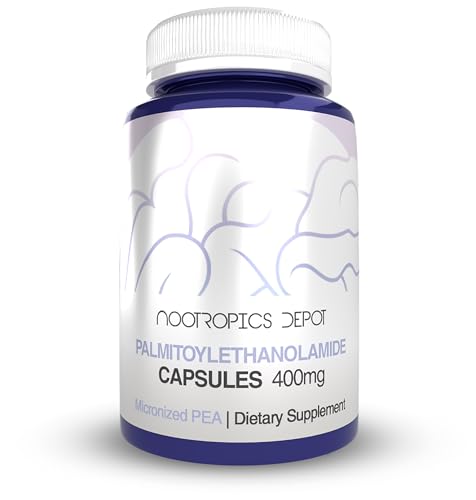
capsules, 300 mg PEA (as Levagen+) per serving: Levagen+ with LipiSperse, a branded PEA ingredient marketed for solubility and absorption - Nootropics Depot Palmitoylethanolamide (PEA) Capsules
capsules, 400 mg micronized PEA per capsule: two or three capsules reach the 600 to 1,200 mg daily range used in trials - Liftmode Palmitoylethanolamide (PEA) Powder
powder, 400 mg per measured scoop: Powder form allows flexible dosing and is significantly cheaper per gram for long-term daily users
As an Amazon Associate we earn from qualifying purchases. PEA quality depends on particle size more than price. Most clinical research used micronized or ultramicronized material, so prefer a product that states its particle size grade or names a branded ingredient such as Levagen+, and check the daily serving reaches the 600 to 1,200 mg used in trials. A label reading only palmitoylethanolamide, with no particle size disclosure, may be standard crystalline powder, but no published human data show how much any PEA form is absorbed.
A Note on the Evidence
Neither PEA nor LDN is FDA-approved to treat, cure, or prevent any disease, and the evidence base for both, while genuinely promising, consists primarily of small or preliminary studies rather than large definitive trials. For LDN specifically, that 2025 meta-analysis of seven randomized trials found no significant difference in pain response versus control overall (Cohen’s d −0.11, 95% CI −0.96 to 0.74); the benefit it did detect was confined to the fibromyalgia subgroup against placebo (d −0.34, 95% CI −0.62 to −0.06) [4], and a systematic review of LDN in fibromyalgia concluded the available evidence “lacks power and multisite reproduction” [5]. PEA’s pooled trial data are more consistently positive, but rest on a similarly modest evidence base [6]. This article is informational only and is not a substitute for medical advice; anyone considering either approach, particularly those on opioids, immunosuppressants, anticoagulants, or chemotherapy, should speak with a qualified healthcare provider before starting.
Frequently Asked Questions
Does PEA work on the same receptors as opioids?
No. PEA does not bind to opioid receptors. Its primary mechanism involves PPAR-α nuclear receptor activation and mast cell stabilization: pathways involved in local inflammation and neuroinflammatory signaling, not the central pain-suppression pathway that opioids target. PEA is not known to carry the dependence, sedation, or respiratory risks associated with opioids, though most trials were short.[8]
Can someone on prescription opioids take PEA?
PEA is not known to interact with opioid medications and has no opioid receptor activity. However, anyone managing pain with prescription opioids is dealing with a complex medical picture, and adding any supplement should be discussed with the prescribing physician. LDN, by contrast, is specifically contraindicated for people currently taking opioid pain medications.
How long does it take PEA to work?
Clinical trials investigating PEA for chronic pain conditions have generally run 4 to 12 weeks, with many participants showing gradual improvement over that window rather than rapid relief. PEA is not a fast-acting analgesic in the way that NSAIDs or opioids are. The proposed mechanism, modulating the inflammatory environment over time, is consistent with a slower onset. Expecting results within days is likely unrealistic for most people.
What is the typical LDN dose and how is it taken?
Most LDN protocols use 1.5 to 4.5 mg daily, taken orally, typically at bedtime. Patients often start at a lower dose (1.5 mg) and titrate upward over weeks to minimize the vivid-dream side effect that some people experience early on. Because this dose is far below the standard 50 mg naltrexone tablet, it must be prepared by a compounding pharmacy and requires a physician’s prescription.
Is there any research comparing PEA and LDN directly?
No head-to-head clinical trials comparing PEA and LDN have been published. Both are studied largely in separate research communities: PEA more in European pain and neurology research, LDN more in autoimmune and fibromyalgia contexts in the US and UK. The comparison is conceptual and mechanistic rather than empirically validated.
Who should definitely talk to a doctor before trying either?
Anyone on full opioid agonists should not use LDN without physician oversight: it will trigger withdrawal. People on immunosuppressants, anticoagulants, or active chemotherapy should consult their physician before adding PEA, as formal interaction studies are limited. Both compounds warrant medical discussion for anyone with serious chronic illness, complex medication regimens, or who is pregnant or breastfeeding.
References
- Rankin L et al. The Basal Pharmacology of Palmitoylethanolamide. International journal of molecular sciences (2020). PMID 33114698
- Kim PS et al. Low-Dose Naltrexone for Chronic Pain: Update and Systemic Review. Current pain and headache reports (2020). PMID 32845365
- Younger J et al. The use of low-dose naltrexone (LDN) as a novel anti-inflammatory treatment for chronic pain. Clinical rheumatology (2014). PMID 24526250
- Hegde NC et al. Low Dose Naltrexone In The Management Of Chronic Pain Syndrome: A Meta-Analysis Of Randomized Controlled Clinical Trials. Current pain and headache reports (2025). PMID 40540205
- Aitcheson N et al. Low-dose naltrexone in the treatment of fibromyalgia: A systematic review and narrative synthesis. Australian journal of general practice (2023). PMID 37021443
- Artukoglu BB et al. Efficacy of Palmitoylethanolamide for Pain: A Meta-Analysis. Pain physician (2017). PMID 28727699
- Giustino Varrassi Palmitoylethanolamide, a Special Food for Medical Purposes, in the Treatment of Chronic Pain: A Pooled Data Meta-analysis. Pain Physician (2016). PMID 26815246
- Earle R. Nestmann Safety of micronized palmitoylethanolamide (microPEA): lack of toxicity and genotoxic potential. Food Science & Nutrition (2016). PMID 28265364
- Due Bruun K et al. Naltrexone 6 mg once daily versus placebo in women with fibromyalgia: a randomised, double-blind, placebo-controlled trial. The Lancet. Rheumatology (2024). PMID 38258677
- Wang Y et al. Palmitoylethanolamide in the Treatment of Pain and Its Clinical Application Prospects. Drug design, development and therapy (2025). PMID 40827226
- Faig-Martí J et al. Use of palmitoylethanolamide in carpal tunnel syndrome: a prospective randomized study. Journal of orthopaedics and traumatology : official journal of the Italian Society of Orthopaedics and Traumatology (2017). PMID 28299455
- Mellar P. Davis et al. Treatment of Established Chemotherapy-Induced Neuropathy with N-Palmitoylethanolamide: A Randomized, Double-Blind Phase II Pilot Study. Cancers (2024). PMID 39766143
- Rosaria Del Giorno et al. Palmitoylethanolamide in Fibromyalgia: Results from Prospective and Retrospective Observational Studies. Pain and Therapy (2015). PMID 26334329
These statements have not been evaluated by the Food and Drug Administration. This information is not intended to diagnose, treat, cure, or prevent any disease. Content is for informational purposes only and is not medical advice; consult a qualified healthcare provider before starting any supplement. As an Amazon Associate we earn from qualifying purchases.