Vulvodynia and vestibulodynia are persistent vulvar pain conditions that are under-researched, frequently misdiagnosed, and treated with medications borrowed from other pain syndromes. Antidepressants and antiepileptics are standard, and their side effects are a common reason women stop taking them.
Palmitoylethanolamide gets recommended here on the strength of a randomized controlled trial. The trial is real. Its headline result is not what the recommendation implies.
Both arms improved, and they improved by similar amounts. The one place a difference appeared was in women whose symptoms had begun recently, and that is the finding worth taking seriously.
Key Takeaways
- Twenty women with vestibulodynia were randomly assigned to oral PEA 400 mg plus transpolydatin 40 mg or to placebo, twice daily for 60 days, while all patients underwent home TENS therapy [1].
- All scores in both groups improved significantly, but the level of improvement was similar between groups: pain score P less than 0.57 and painful intercourse P less than 0.38 [1].
- A regression analysis by disease duration found the combination more effective in women with more recent onset, where both pain and painful intercourse reached P less than 0.01, while the placebo group showed no such relationship [1].
- Every participant also received TENS, an average of 26.7 sessions [1], so no arm tested the supplement on its own.
- The remaining evidence is a single case report of topical baclofen combined with PEA [2], plus context from a systematic review of medical cannabis for gynecologic pain [3].
The Mechanistic Case
The trial was built on a specific premise: that a PEA and transpolydatin combination may contribute to downregulation of mast cell hyperactivity, which is believed to be responsible for the proliferation and sprouting of vestibular pain fibres and the associated hyperalgesia and allodynia [1].
That is a more precise hypothesis than most supplement rationales. It names the cell type, the downstream anatomical change, and the resulting symptoms. Hyperalgesia means pain out of proportion to the stimulus. Allodynia means pain from something that should not hurt at all, which is what makes light touch or sitting intolerable in this condition.
The same mast cell reasoning underlies this site’s articles on interstitial cystitis, endometriosis and IBS, but it is a proposed mechanism: in the IBS trial of PEA plus polydatin, mucosal mast cell counts did not change significantly [5][6].
What the Trial Did
Twenty women with vestibulodynia were randomly assigned to receive oral PEA 400 mg and transpolydatin 40 mg, or placebo, twice daily for 60 days [1]. All patients underwent transcutaneous electrical nerve stimulation therapy in a self-administered home protocol, receiving a mean of 26.7 sessions [1].
Research note: A review reports vulvodynia was treated with a compounded cream of baclofen 5% plus palmitoylethanolamide 1%, so any benefit comes from the combination and is not shown for PEA alone [7].

Outcomes were a visual analogue pain scale, the Marinoff score for painful intercourse, and current perception threshold measured at the vulvar vestibule, all assessed at baseline and at the end of treatment [1].
The trial had a second purpose beyond testing the supplement: to confirm that TENS is effective when delivered at home rather than in a clinic [1]. Keeping that in view explains the design, because it meant every participant needed the TENS protocol.
The Headline Result Is Null
All scores in the two groups improved significantly, although the level of improvement was similar between the groups, with the pain scale at P less than 0.57 and painful intercourse at P less than 0.38 [1].
Those P values describe the comparison between groups, and neither approaches significance. Women receiving PEA plus polydatin did not do better overall than women receiving placebo. Both got better, because both were doing TENS.
This is worth stating plainly because the study is often cited simply as a randomized controlled trial supporting PEA in vulvodynia, which is true only in the sense that the trial exists. Its primary comparison found no added benefit.
The trial’s clearest positive finding is about the other intervention entirely. It confirms that TENS is of significant benefit in the management of vestibulodynia, including in a home environment [1]. For a woman with this diagnosis reading for practical guidance, that is the more useful sentence in the paper.
The Subgroup That Did Separate
Analysis of symptom regression related to duration of disease revealed the therapy to be more effective when PEA plus transpolydatin is included in cases with more recent disease onset, compared with the placebo group [1]. In that analysis the supplement group reached P less than 0.01 for both the pain scale and painful intercourse, while the placebo group’s corresponding values were non-significant [1].
The authors’ conclusion follows this directly: the combination can be a value-added treatment adjunct when the onset of vestibulodynia is more recent, or when the disease relapses [1].
Biologically this is coherent. Chronic pain conditions involve progressive changes in how the nervous system processes signals, and an anti-inflammatory intervention aimed at mast cell activity is more plausible early, before those changes consolidate. If PEA works here at all, working better in recent-onset disease is the pattern you would predict.
It is still a subgroup analysis in a twenty-person trial. Ten women per arm, sliced further by disease duration, leaves very few people in each cell. Treat it as a strong lead for a purpose-built trial in recent-onset disease, which nobody has yet run.
The pattern also echoes across this literature. A responder analysis in women with chronic pelvic pain found the best responders were those with baseline pain scores above 6, irrespective of underlying diagnosis, while noting the general lack of evidence about PEA in female chronic pelvic pain [4]. Baseline severity there, disease recency here. Both point the same way: the effect, if real, concentrates in specific subgroups rather than spreading across everyone with the diagnosis.
What Else Exists
Very little. A case report describes a 33-year-old woman with intractable chronic vulvar and anal pain who could not have intercourse, cycle, or sit for more than five minutes, and had not responded to standard treatments [2]. She was prescribed a combination of topical baclofen 5% and PEA 400 mg three times daily, and after three months her symptoms decreased by more than 50% with intercourse possible again without pain [2].
That is one patient, with two interventions, and no control. It is worth knowing that clinicians have tried this and reported an outcome. It is not evidence of efficacy, and the authors position it as suggesting a viable option rather than a proven one [2].
Wider context comes from a systematic review of medical cannabis for gynecologic pain conditions, which covers endocannabinoid-enhancing approaches including PEA [3]. Useful for understanding why this class of compound keeps being tried in vulvar pain, not as evidence for the specific product.
Practical Reading
For someone with vulvodynia or vestibulodynia, the evidence-supported takeaways are: TENS has randomized support including in a home protocol [1]; adding PEA with polydatin did not improve outcomes overall in that trial [1]; and a subgroup with recent onset did appear to benefit, at a level of evidence that justifies discussion with a specialist rather than confidence [1].
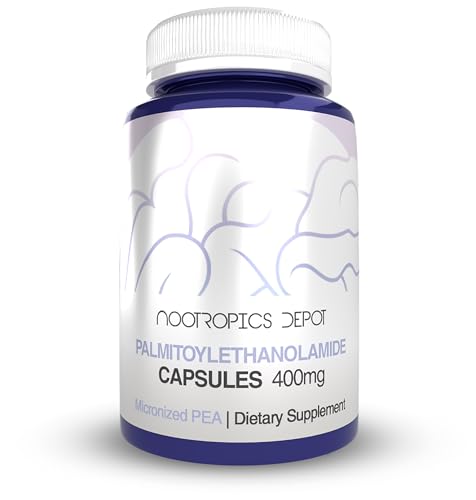
Note also what was tested. Oral PEA 400 mg with transpolydatin 40 mg twice daily, alongside TENS [1]. Not PEA alone, and not without the device therapy. These conditions are under-diagnosed and benefit from specialist assessment, and nothing in this literature substitutes for that.
Frequently Asked Questions
Does PEA work for vulvodynia?
In the one randomized trial, adding PEA and polydatin to TENS produced improvement similar to placebo plus TENS, with between-group P values of 0.57 for pain and 0.38 for painful intercourse [1]. A subgroup with recent symptom onset did show significant benefit [1].
What dose was tested?
PEA 400 mg plus transpolydatin 40 mg, twice daily for 60 days, alongside home TENS therapy [1].
Who might benefit most?
The trial’s regression analysis pointed to women with more recent onset of vestibulodynia, or with relapsing disease [1]. That is a subgroup finding in a twenty-person study, not an established indication.
Is TENS worth doing?
The trial confirms TENS is of significant benefit in managing vestibulodynia, including when self-administered at home, with participants completing an average of 26.7 sessions [1].
What about topical PEA for vulvar pain?
Only a single case report exists, combining topical baclofen 5% with PEA, in one woman over three months [2]. That is the weakest tier of clinical evidence.
References
- Murina F, Graziottin A, Felice R, et al. Vestibulodynia: synergy between palmitoylethanolamide + transpolydatin and transcutaneous electrical nerve stimulation. J Low Genit Tract Dis (2013). PMID 23343704
- Keppel Hesselink JM, Kopsky DJ, Sajben NL. Vulvodynia and proctodynia treated with topical baclofen 5% and palmitoylethanolamide. Arch Gynecol Obstet (2014). PMID 24691823
- Han L, Lutgendorf S, Kaplan JR, et al. Medical Cannabis for Gynecologic Pain Conditions: A Systematic Review. Obstet Gynecol (2022). PMID 35104069
- Cicinelli E, Trojano G, Vitagliano A, et al. Looking for Responders among Women with Chronic Pelvic Pain Treated with a Comicronized Formulation of Palmitoylethanolamide and Polydatin. Biomed Res Int (2022). PMID 35578721
- Cesare Cremon et al. Randomised clinical trial: the analgesic properties of dietary supplementation with palmitoylethanolamide and polydatin in irritable bowel syndrome. Alimentary Pharmacology & Therapeutics (2017). PMID 28164346
- LoVerme J et al. The search for the palmitoylethanolamide receptor. Life sciences (2005). PMID 15963531
- Keppel Hesselink JM et al. New topical treatment of vulvodynia based on the pathogenetic role of cross talk between nociceptors, immunocompetent cells, and epithelial cells. Journal of pain research (2016). PMID 27757050
These statements have not been evaluated by the Food and Drug Administration. This information is not intended to diagnose, treat, cure, or prevent any disease. Content is for informational purposes only and is not medical advice; consult a qualified healthcare provider before starting any supplement. As an Amazon Associate we earn from qualifying purchases.