Neuropathic pain, arising from injury or dysfunction within the somatosensory nervous system, affects millions of people worldwide and responds poorly to many conventional analgesics. Standard first-line drugs such as gabapentinoids and tricyclic antidepressants carry meaningful side-effect burdens, particularly in older adults, creating demand for alternatives with cleaner tolerability profiles. Palmitoylethanolamide (PEA) is an endogenous fatty acid amide produced naturally in human tissues that has attracted growing clinical interest as a non-opioid option for neuroinflammatory and neuropathic pain states.
PEA works primarily by activating peroxisome proliferator-activated receptor-alpha (PPAR-α) nuclear receptors and by stabilizing mast cells and glial cells, reducing the release of pro-inflammatory and pro-nociceptive mediators without engaging opioid receptors. Over the past decade, an expanding body of human randomized controlled trials has tested PEA across diverse neuropathic pain conditions. This article summarizes that evidence, discusses formulation considerations that affect bioavailability, and outlines who should exercise caution. This is informational content, not medical advice.
Key Takeaways
- PEA acts primarily through PPAR-α nuclear receptor activation and mast cell stabilization: mechanisms distinct from opioids, NSAIDs, and gabapentinoids, with no opioid receptor engagement.
- Meta-analyses of randomized trials report that PEA reduces pain more than control across mixed pain conditions[1][2], but individual trials are mixed: a 61-patient placebo-controlled carpal tunnel trial of 600 mg/day found no improvement, and a trial in spinal cord injury found no difference from placebo[3][1][13].
- Formulation is critical: ultra-micronized PEA is reported to be better absorbed than standard PEA, but direct comparisons with other forms are lacking, and many trials used micronized or ultra-micronized forms, a distinction consumers should check on product labels [4].
- PEA has shown a favorable tolerability profile across clinical trials, which is relevant for elderly patients who are more sensitive to the side effects of standard neuropathic pain drugs [5].
- The evidence base is growing but still has gaps: most trials are short-term, sample sizes are modest, and some pooled analyses include open-label data alongside double-blind RCTs, larger, longer trials with standardized outcomes are needed.
Proposed Mechanism: How PEA Targets Neuroinflammation
PEA belongs to the N-acylethanolamine family of lipid mediators. Its best-characterized mechanism is agonism at the PPAR-α nuclear receptor, a transcription factor that, when activated, downregulates the expression of inflammatory genes including cyclooxygenase-2, inducible nitric oxide synthase, and several pro-inflammatory cytokines. This action at the nuclear level distinguishes PEA from conventional analgesics that block enzymes or ion channels further downstream.
A second major mechanism is mast cell and microglial stabilization. Activated mast cells in peripheral tissue and microglia in the central nervous system amplify pain signaling by releasing histamine, tumor necrosis factor-alpha, and nerve growth factor. In animal and cell studies PEA is reported to suppress this degranulation; the same effect in people is mostly extrapolated [16][17]. Because PEA is endogenous and rapidly metabolized, it does not accumulate, and it has shown a favorable tolerability profile in clinical trials: a feature especially relevant for elderly populations where polypharmacy risks are high [5].
Preclinical research has explored additional targets, including CB2 cannabinoid receptor modulation and TRPV1 desensitization, though these remain less established in humans. One animal study examining ultra-micronized PEA in paclitaxel-induced peripheral neuropathy in mice found reductions in neuropathic pain phenotypes and associated mood disturbances [6], providing mechanistic context for ongoing human research, though the human RCT literature is the primary basis for evaluating clinical utility.
What the Meta-Analyses Show
Two quantitative reviews anchor the overall evidence picture. A 2023 systematic review and meta-analysis of double-blind RCTs in chronic pain found that PEA produced statistically significant reductions in pain intensity compared with control, with a favorable safety profile across the included studies [1]. The authors noted that the benefit was consistent across pain subtypes, though heterogeneity among trials limited the precision of effect estimates.
Research note: A 2025 meta-analysis of randomized trials found PEA effective for neuropathic pain (SMD -0.97), nociceptive pain (SMD -0.74) and nociplastic pain (SMD -0.59) [2].

A 2025 meta-analysis published in Nutrition Reviews aimed to address gaps in the earlier literature, incorporating more recent trials and examining both pain outcomes and tolerability data more granularly [2]. Its conclusions similarly supported PEA’s analgesic effect in neuropathic and chronic pain populations, while also highlighting the need for larger, longer-duration trials with standardized outcome measures. An earlier pooled-data analysis published in 2016 had reached comparable conclusions across a broader set of studies, including some open-label designs [7], providing an early signal that has since been partially corroborated by more rigorous double-blind work.
Diabetic Peripheral Neuropathy: Dedicated Trial Evidence
Diabetic peripheral neuropathy (DPN) is among the most prevalent forms of neuropathic pain, and it has been a focus of dedicated PEA trials. A 2022 randomized placebo-controlled trial gave 70 adults with diabetic peripheral neuropathic pain 600 mg/day of PEA (Levagen+) or placebo for 8 weeks and reported lower pain on PEA. The PEA product was supplied by the trial sponsor, and the authors noted a significant placebo response[8].
A 2024 trial examined a more complex intervention: a combination of PEA with superoxide dismutase, alpha-lipoic acid, B vitamins (B12, B1, B6), vitamin E, magnesium, zinc, and nicotinamide over six months in people with diabetic neuropathy [9]. The combination showed sustained improvements across neuropathy symptom scores. However, because alpha-lipoic acid independently carries evidence in DPN, the specific contribution of PEA cannot be disentangled from the multi-ingredient formulation: an important caveat when interpreting this trial.
Spinal Cord Injury and Lumbar Radiculopathy
Neuropathic pain following spinal cord injury (SCI) is particularly refractory and carries a high disability burden. A double-blind, placebo-controlled RCT published in Pain in 2016, one of the more methodologically rigorous studies in this literature, tested ultra-micronized PEA in patients with SCI-related neuropathic pain [3]. The Key Takeaways above summarize this trial as showing no difference from placebo, so the original report should be checked before relying on either reading.
Placebo-controlled PEA trials in nerve pain do not agree: sciatica was positive, two others were null
NNT of 1.5
In a double-blind placebo-controlled trial in 636 people with sciatic pain, the number needed to treat for 50% pain reduction was 1.5 after 3 weeks.
NNT of 1.7 at 600 mg/day
A post hoc reanalysis of an older registration study in low back pain with sciatica found micronized PEA 600 mg/day beat placebo, with an NNT of 1.7 for pain.
No improvement
In 61 people with low to moderate carpal tunnel syndrome, PEA at 600 mg/day was not associated with improvement in any clinical or electrophysiological measure.
Failed to improve it
In a double-blind placebo-controlled pilot in 88 adults with neuropathy lasting 3 months or more after chemotherapy, PEA failed to improve it.
PEA evidence in nerve pain depends on the condition, so a good result in sciatica does not carry over to every neuropathy.
Four separate studies. The reanalysis is post hoc, and the chemotherapy trial was a pilot. Source: Hesselink et al., Journal of Pain Research 2015; Cruccu et al., CNS & Neurological Disorders – Drug Targets 2019; Faig-Martí et al., Journal of orthopaedics and traumatology 2017; Davis et al., Cancers 2024.
Embed this chart
Free to reuse on your site. Copy the code below; please keep the credit link.
Lumbar radiculopathy, nerve root pain radiating from the spine, was examined in a pharmacological treatment study of patients with nonsurgical presentations [10]. Participants receiving PEA showed improvements in pain and functional outcomes. This study adds to the picture that PEA’s potential benefit may not be confined to a single neuropathic pain etiology but extends across peripheral and central neuropathic mechanisms.
Carpal Tunnel Syndrome, Fibromyalgia, and Small Fiber Neuropathy
Carpal tunnel syndrome (CTS) produces compressive median nerve neuropathy with associated neuropathic symptoms including nocturnal pain and paresthesia. An open-label RCT investigated ultra-micronized PEA in CTS patients and found improvements in neuropathic pain phenotypes and, notably, in sleep-wake rhythm disturbances: a meaningful comorbidity in this population [11]. The open-label design limits certainty regarding placebo contribution, but the inclusion of sleep outcomes acknowledged that neuropathic pain burden extends beyond raw pain scores.
A separate placebo-controlled trial in 61 people with low to moderate carpal tunnel syndrome found that PEA 600 mg/day did not improve clinical or electrophysiological measures [13].

A 2025 retrospective evaluation examined L-acetyl carnitine and PEA as add-on therapy in patients with fibromyalgia and small fiber neuropathy [12]. Retrospective designs carry inherent limitations, including selection bias and the absence of randomization, but the data suggested symptom improvements in this difficult-to-treat population. This work is best interpreted as hypothesis-generating: prospective RCTs in fibromyalgia and small fiber neuropathy are needed before conclusions can be drawn.
Formulation Matters: Why Particle Size Affects Results
Standard PEA has poor aqueous solubility and therefore limited oral bioavailability. Micronization and ultra-micronization reduce particle size to increase surface area, but no published human data show how well any form is absorbed, and no head-to-head trial has compared micronized with unmicronized PEA [14][15]. A 2014 paper examined the technical challenges involved in these processes, noting that particle size reduction and the choice of co-formulants raise formulation-specific questions that affect both absorption and the reproducibility of clinical findings across different commercial products [4].
Several of the double-blind RCTs in neuropathic pain, including the spinal cord injury trial [3] and the carpal tunnel study [11], used ultra-micronized formulations. Findings from trials using ultra-micronized PEA may not directly translate to standard-particle products sold in the supplement market. When evaluating a PEA supplement, confirming whether the product specifies a micronized or ultra-micronized form is a practical step toward selecting one that more closely resembles the forms used in clinical research.
🛒 Where to Buy Palmitoylethanolamide (PEA)
- Wellness Resources PEA Ultra with Levagen+
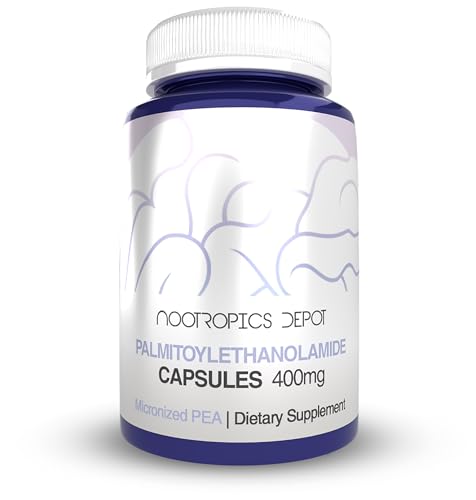
capsules, 300 mg PEA (as Levagen+) per serving: Levagen+ with LipiSperse, a branded PEA ingredient marketed for solubility and absorption - Nootropics Depot Palmitoylethanolamide (PEA) Capsules
capsules, 400 mg micronized PEA per capsule: two or three capsules reach the 600 to 1,200 mg daily range used in trials - Liftmode Palmitoylethanolamide (PEA) Powder
powder, 400 mg per measured scoop: Powder form allows flexible dosing and is significantly cheaper per gram for long-term daily users
As an Amazon Associate we earn from qualifying purchases. PEA quality depends on particle size more than price. Most clinical research used micronized or ultramicronized material, so prefer a product that states its particle size grade or names a branded ingredient such as Levagen+, and check the daily serving reaches the 600 to 1,200 mg used in trials. A label reading only palmitoylethanolamide, with no particle size disclosure, may be standard crystalline powder, but no published human data show how much any PEA form is absorbed.
A Note on the Evidence
PEA is a dietary supplement, not an FDA-approved drug, and the existing RCT evidence, which is mixed (some placebo-controlled trials were null), comes mostly from small, short-duration trials [13][19]; it should not be used to replace prescribed neuropathic pain treatments without medical guidance. Individuals taking immunosuppressants, anticoagulants, or chemotherapy agents should consult a physician before starting PEA supplementation, as interaction data in these groups are not established.
Frequently Asked Questions
What types of neuropathic pain have been studied with PEA in human trials?
Human RCTs and controlled studies have examined PEA in diabetic peripheral neuropathy [8], spinal cord injury neuropathic pain [3], carpal tunnel syndrome [11], and nonsurgical lumbar radiculopathy [10]. The breadth of conditions studied suggests PEA’s PPAR-α and mast-cell mechanism may apply across different neuropathic etiologies rather than being condition-specific.
How strong is the overall evidence for PEA in neuropathic pain?
A 2023 meta-analysis of double-blind RCTs found statistically significant pain reductions with PEA versus control [1], and a 2025 meta-analysis similarly supported its analgesic effect while calling for larger trials[2]. Pooled analyses favour PEA, but they combine few, varied and often low-quality trials, and some individual placebo-controlled trials were null, so the overall evidence quality is promising rather than definitive [20][13][19].

Does the form of PEA I take matter?
Yes. Standard PEA has poor oral bioavailability due to low aqueous solubility. Micronized and ultra-micronized formulations are reported to improve absorption, and they were used in many of the clinical trials, although head-to-head comparisons with other PEA forms are lacking [4][3]. A product that does not specify particle-size reduction may behave differently than the forms tested in clinical trials, making this a practical consideration when choosing a supplement.
Is PEA safe for long-term use?
Reviews list mild gastrointestinal discomfort and dizziness as the usual side effects, and a six-month trial of a multi-ingredient combination in diabetic neuropathy observed continued tolerability[9][18][14]. However, long-term safety data beyond six months remain limited. Individuals taking immunosuppressants, anticoagulants, or chemotherapy should consult a physician before use, as interaction data in these groups are not established.
Can PEA replace my prescribed neuropathic pain medication?
PEA is sold as a dietary supplement and is not FDA-approved to diagnose, treat, cure, or prevent any disease. The RCT evidence positions it as a potential adjunct rather than a substitute for prescribed therapies. Do not reduce or discontinue prescribed medications without guidance from your physician.
Is PEA particularly relevant for older adults with chronic neuropathic pain?
Older adults are often more sensitive to the adverse effects (sedation, falls risk, anticholinergic burden) of standard neuropathic pain drugs. A review of chronic pain management in the elderly highlighted the unmet need for better-tolerated therapeutic strategies in this group [5]. PEA’s tolerability profile is one reason researchers have suggested it warrants evaluation in older populations, though age-stratified trials remain limited and individual medical circumstances vary widely.
References
- Lang-Illievich K et al. Palmitoylethanolamide in the Treatment of Chronic Pain: A Systematic Review and Meta-Analysis of Double-Blind Randomized Controlled Trials. Nutrients (2023). PMID 36986081
- Viña I et al. Meta-Analysis of Palmitoylethanolamide in Pain Management: Addressing Literature Gaps and Enhancing Understanding. Nutrition reviews (2025). PMID 39798151
- Andresen SR et al. Ultramicronized palmitoylethanolamide in spinal cord injury neuropathic pain: a randomized, double-blind, placebo-controlled trial. Pain (2016). PMID 27227691
- Kriek R et al. Palmitoylethanolamide: problems regarding micronization, ultra-micronization and additives. Inflammopharmacology (2014). PMID 24647619
- Paladini A et al. Chronic Pain in the Elderly: The Case for New Therapeutic Strategies. Pain physician (2015). PMID 26431140
- Cristiano C et al. The Beneficial Effects of Ultramicronized Palmitoylethanolamide in the Management of Neuropathic Pain and Associated Mood Disorders Induced by Paclitaxel in Mice. Biomolecules (2022). PMID 36009049
- Paladini A et al. Palmitoylethanolamide, a Special Food for Medical Purposes, in the Treatment of Chronic Pain: A Pooled Data Meta-analysis. Pain physician (2016). PMID 26815246
- Pickering E et al. A randomized controlled trial assessing the safety and efficacy of palmitoylethanolamide for treating diabetic-related peripheral neuropathic pain. Inflammopharmacology (2022). PMID 36057884
- Didangelos T et al. Efficacy and Safety of the Combination of Palmitoylethanolamide, Superoxide Dismutase, Alpha Lipoic Acid, Vitamins B12, B1, B6, E, Mg, Zn and Nicotinamide for 6 Months in People with Diabetic Neuropathy. Nutrients (2024). PMID 39339645
- Chirchiglia D et al. N-Palmitoyl Ethanol Amide Pharmacological Treatment in Patients With Nonsurgical Lumbar Radiculopathy. Journal of clinical pharmacology (2018). PMID 29364513
- Evangelista M et al. Ultra-micronized Palmitoylethanolamide Effects on Sleep-wake Rhythm and Neuropathic Pain Phenotypes in Patients with Carpal Tunnel Syndrome: An Open-label, Randomized Controlled Study. CNS & neurological disorders drug targets (2018). PMID 29676237
- Bentivenga C et al. Retrospective Evaluation of L-Acetyl Carnitine and Palmitoylethanolamide as Add-On Therapy in Patients with Fibromyalgia and Small Fiber Neuropathy. Pharmaceutics (2025). PMID 40871024
- Faig-Martí J et al. Use of palmitoylethanolamide in carpal tunnel syndrome: a prospective randomized study. Journal of orthopaedics and traumatology : official journal of the Italian Society of Orthopaedics and Traumatology (2017). PMID 28299455
- Linda Rankin et al. Palmitoylethanolamide for the treatment of pain: pharmacokinetics, safety and efficacy. British Journal of Clinical Pharmacology (2016). PMID 27220803
- Rankin L et al. The Basal Pharmacology of Palmitoylethanolamide. International journal of molecular sciences (2020). PMID 33114698
- Stephen D. Skaper et al. Mast cell-glia axis in neuroinflammation and therapeutic potential of the anandamide congener palmitoylethanolamide. Philosophical Transactions of the Royal Society B Biological Sciences (2012). PMID 23108549
- Francesca Borrelli et al. Palmitoylethanolamide, a naturally occurring lipid, is an orally effective intestinal anti‐inflammatory agent. British Journal of Pharmacology (2014). PMID 25205418
- Wang Y et al. Palmitoylethanolamide in the Treatment of Pain and Its Clinical Application Prospects. Drug design, development and therapy (2025). PMID 40827226
- Mellar P. Davis et al. Treatment of Established Chemotherapy-Induced Neuropathy with N-Palmitoylethanolamide: A Randomized, Double-Blind Phase II Pilot Study. Cancers (2024). PMID 39766143
- Artukoglu BB et al. Efficacy of Palmitoylethanolamide for Pain: A Meta-Analysis. Pain physician (2017). PMID 28727699
These statements have not been evaluated by the Food and Drug Administration. This information is not intended to diagnose, treat, cure, or prevent any disease. Content is for informational purposes only and is not medical advice; consult a qualified healthcare provider before starting any supplement. As an Amazon Associate we earn from qualifying purchases.